

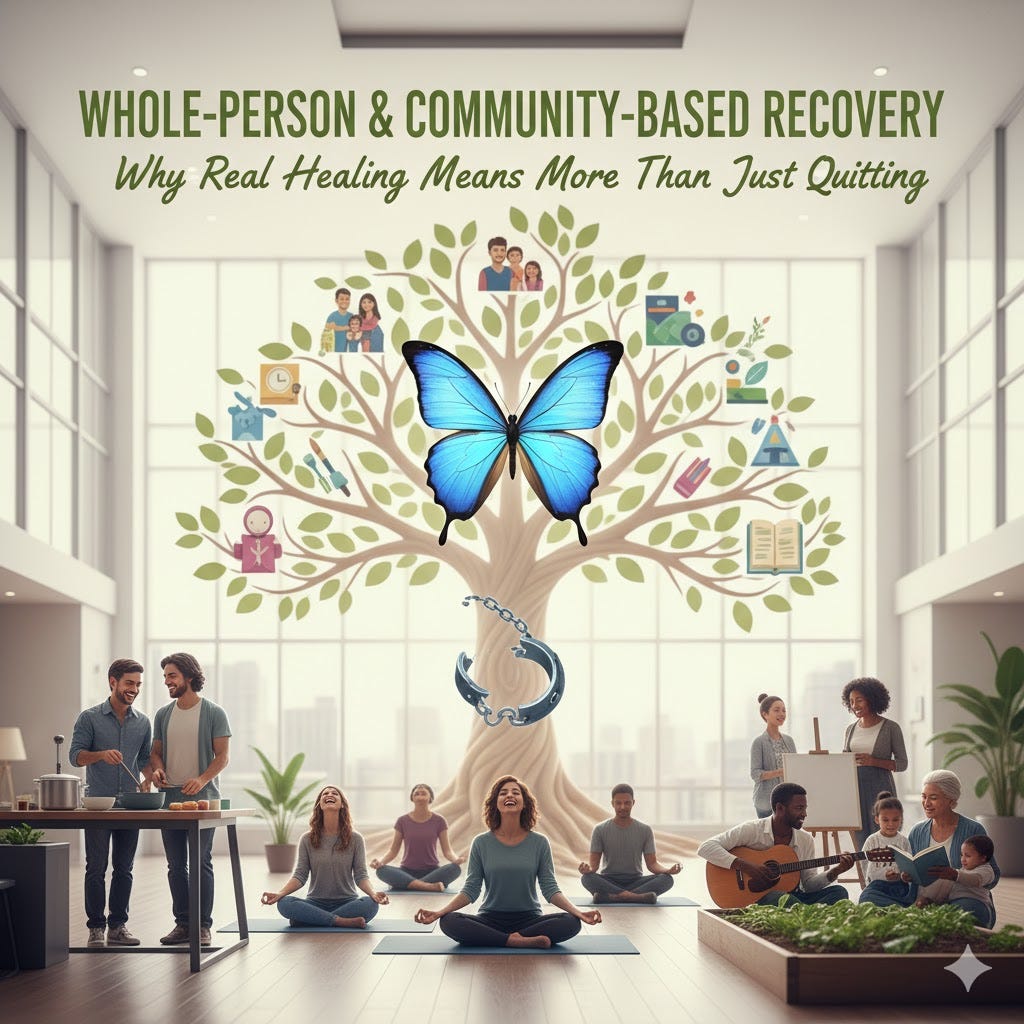
Let’s be real for a second. If recovery was just about “putting down the bottle” or walking away from drugs, we’d have solved addiction a long time ago. But anyone who’s lived it—or loved someone who has—knows it’s more complicated than that.
Addiction doesn’t care if you’re a banker or a bartender, a stay-at-home mom or a former felon. I’ve seen it upend the lives of doctors, teachers, construction workers, college kids, retirees, people who “should have known better”—all of them. The details might change, but the struggle? That’s universal.
So why do so many recovery programs still act like the goal is simply stopping the substance? Why are we still sending people home with a handshake and a little hope, like that’s enough?
Here’s the truth:
Real recovery isn’t just about what you give up. It’s about what you build. It’s about healing your mind, your body, your relationships, and your sense of purpose. And—this is huge—it’s about having a community that actually has your back.
What Does “Whole-Person” Recovery Actually Mean?
Maybe you’ve heard the term before and thought, “Yeah, sure, sounds good, but what IS it?” Here’s the deal:
Whole-person recovery means treating all of you, not just your addiction. That means:
Checking in on your mental health, not just your substance use.
Anxiety, depression, trauma, and shame are all common parts of the struggle. If your program treats you like a walking diagnosis, or expects you to “just get over it,” you’re not getting the help you deserve.Making sure you have safe housing, food, and a way to get to work or appointments.
Recovery without stability is like building a house on sand. If you’re worried about where you’ll sleep or your next meal, “working the steps” can feel impossible.Helping you rebuild relationships, or start new ones if the old ones are toxic.
Addiction isolates, even when you’re surrounded by people. Real healing often means reconnecting with family (if it’s safe), building new friendships, or finding your sense of belonging in a community that doesn’t judge your past.Supporting your physical health—doctor visits, meds, pain issues, all of it.
Many people in recovery have chronic pain, untreated illnesses, or just years of neglecting their bodies. Good care means learning to take care of yourself, sometimes for the first time ever.Letting you figure out who you are without addiction calling the shots.
Maybe you never knew, or maybe you lost yourself along the way. Identity work isn’t fluffy—it’s the heart of lasting change.
Community-Based: Why Going Solo Doesn’t Work
Think about the last time you tried to make a big life change all on your own. Maybe it was quitting smoking, starting a new job, leaving a toxic relationship, or just getting out of bed during a rough patch. It’s hard, right? Now multiply that by a thousand, and you’re close to what recovery feels like when you’re isolated.
Community-based recovery means you don’t have to do it alone. It means finding support groups, peer mentors, friends, and sometimes even professionals who “get it.” It means having people who check on you, root for you, and hold you accountable—people who actually care whether you make it.
But let’s be honest. Community isn’t always easy to find—especially if you’ve burned bridges or live in a place where addiction is still a dirty secret. Sometimes, community starts small: a single friend, a neighbor, an online group. Sometimes it’s messy, awkward, or doesn’t look like what you expected. But it’s worth fighting for.
Real-World Examples (Because This Isn’t Just Theory)
The “Perfect-on-Paper” Professional:
I once met a lawyer who hid her drinking behind long hours at the office. Nobody knew how much she was struggling—until she collapsed in her kitchen. When she finally got help, it wasn’t a fancy detox that saved her. It was a recovery group for stressed-out professionals, a therapist who helped her work through old trauma, and a close friend who checked in every single day. Her recovery wasn’t just about not drinking. It was about finding peace in her own skin for the first time in years.The Guy Just Out of Jail:
Another story: a guy who’d spent half his life in and out of jail for drugs. He’d done every 30-day program you could name. What finally stuck? A reentry program that helped him find a job, get his license back, and connect with a sponsor who’d been through the same mess. For him, recovery was about dignity and hope—feeling like he could actually build a life, not just stay out of prison.The Mom Who Lost Everything:
I think about a mom who’d lost custody of her kids because of her use. She was treated like a problem, not a person. But one community center saw her as a whole person—a parent, a survivor, someone who wanted another shot. They helped her with housing, offered parenting classes, and gave her a safe space to talk about what she’d been through. She got her kids back, and more importantly, she got herself back.The College Student:
Even students who “have it all” can spiral. One young man nearly flunked out because he was hiding a pill addiction. What made the difference was a campus recovery group, professors who cut him some slack when he was honest, and a roommate who stuck by him. He needed support on every level—academics, health, and just surviving day to day.The Worker Who Hid in Plain Sight:
Then there’s the warehouse worker who never missed a shift, but was popping painkillers to get through the day. He didn’t trust doctors or “the system.” What changed for him was a coworker who opened up about his own recovery, and the shop steward who connected him with a union-run support group. Sometimes, the lifeline is right under your nose.
Why Misconceptions About Recovery Hurt All of Us
There are some persistent myths out there:
“You have to hit rock bottom.” Not true. You deserve help at any point.
“Addiction is a choice.” Nobody chooses to be sick, alone, or stuck.
“If you really wanted to quit, you would.” Recovery is hard, even when you want it more than anything.
“Only certain people become addicted.” This one might be the most damaging. Addiction doesn’t care about your job, your background, or your achievements.
If you see your story in any of these examples, know this: you’re not alone, and you’re not broken. You’re human.
What Should Real Recovery Support Look Like?
If you’re in or considering recovery, here’s what to look for (and what to demand):
Programs that ask about your life, not just your substance use. If all they care about is how long you’ve been sober, that’s not enough.
Access to mental health support. Depression, anxiety, trauma—these are common and treatable, but only if someone actually helps.
Help with real-life stuff. Housing, work, transportation, food. If your program ignores this, they’re missing the point.
Peer support. People who’ve been there can make all the difference. Don’t settle for programs that act like you’re the only one struggling.
Flexibility and respect. You’re not a number. You have a say in your care. The best programs listen.
Sometimes, you’ll need to piece together your own team—maybe it’s a counselor at school, a faith leader, a trusted friend, and an online support group. That’s still community. That still counts.
Urban, Rural, and Everywhere In Between
In cities: You might have more options, but also more chances to get lost in the shuffle. If the first program doesn’t feel right, keep looking. There are recovery groups for every kind of person, and you deserve to find one where you feel seen.
In rural areas: Resources might be thin, but community ties can be strong. Sometimes the best help is at the local church, clinic, or even a neighbor’s kitchen table. Don’t be afraid to ask for creative solutions—telehealth, group rides, local volunteers. If there’s no meeting, maybe you start one, even if it’s just you and one other person at first.
Everywhere, shame and silence can be the biggest barriers. If you’re afraid to speak up, start small. One honest conversation can change everything.
How to Advocate for Yourself (or Someone You Love)
Here’s what to do if you’re ready for real, whole-person, community-based care:
Ask questions:
“What kind of support do you offer besides stopping the substance?”
“Is there help for my mental health?”
“Can you connect me with housing, job support, or peer mentors?”
“Are there people here who’ve been through recovery themselves?”
Don’t take “no” for an answer:
If the first place can’t help, ask for a referral. If you’re dismissed, keep asking. You have the right to care that treats you as a person, not a problem.Find your people:
Online groups, faith communities, recovery meetups, or just one trusted friend. You need people who understand, not just professionals.Share your story:
If you find something that works—a group, a counselor, a strategy—tell others. You might be the person who saves someone else’s life.Know your worth:
You’re more than your addiction. You deserve real help—and a real shot at building a life you want.
Final Thoughts: Progress, Not Perfection
Recovery isn’t neat or linear. There will be setbacks, false starts, and days where just getting out of bed is a win. That doesn’t mean you’re failing. It means you’re living.
Don’t let anyone tell you what your recovery “should” look like. Don’t let shame keep you from asking for more. There’s no single path, and there’s no shame in starting over—again, and again, if you need to.
Progress is progress—a mile or a millimeter. Don’t let anyone tell you otherwise. And don’t let anyone tell you that you have to settle for less than whole-person, community-based care.
You’re not alone. And you never have to be.
If you’re ready to take the next step, reach out. Find your people. Demand the care you deserve. You are worth it.
Thank you so much for this powerful piece, Belle. Your words found me at exactly the right time.
My son has been struggling with addiction and homelessness for years. We now care for his young son, who we adopted, and for a long time it felt like I had lost him—both as a son and as a person I could reach.
About eight months ago, something shifted. He turned himself in on his outstanding warrants and has been in jail since. He’s detoxed, clear-headed, gained back weight, and—maybe the best part—we’re finally really getting to know each other again. We’re actually laughing together. He's reading Dharma Punx (so I did too), and recently asked me to teach him to meditate. I never thought I'd hear those words come out of his mouth.
He'll be getting out soon. And while I am hopeful, I’d be lying if I said I wasn’t scared too. Not because I don’t believe in him, but because I honestly don’t know what to do beyond what I’m doing: giving him love, finding him a safe place to land, and searching for spiritually-based NA groups like he’s asked for.
Your emphasis on community, dignity, and treating the whole person—not just the addiction—really hit home. It’s what I’ve been feeling but didn’t have the words for. I even wrote about our journey recently in a post titled A Mother, A Son, and The Dharma Path to Healing.
I have a feeling I’ll learn a lot from your work, and I’m grateful to have found you.
Thank you for writing this—truly.