

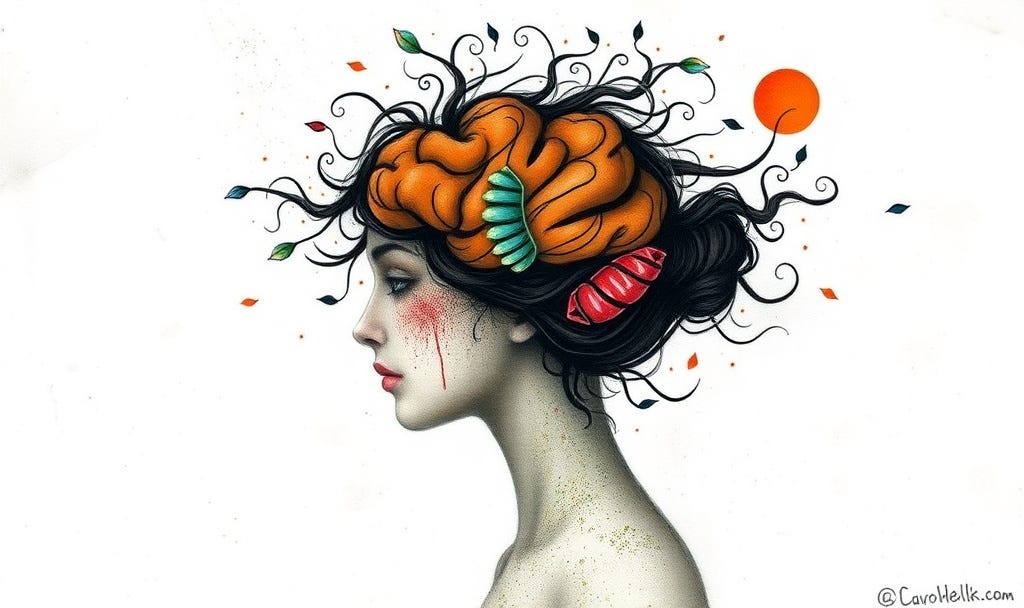
Here’s something nobody tells you when you’re scrubbing around in the broken glass of addiction, codependency, or any garden-variety “fallout” from trauma: Most of what’s tripping you up now didn’t start with you. And unwinding it isn’t as simple as willpower, or positive thinking, or reading one more Instagram quote about boundaries.
This post is for the people wading through the thick of it—the ones who feel like self-worth is a language that never made it into their childhood home, who pick partners they know will break them, who say yes when they mean hell no, and who can’t stand conflict because it always led somewhere scary. But it’s just as much for the therapists, case managers, parents, recovery coaches, and anyone on the “support” side who’s ever asked themselves (or screamed): “Why don’t they just leave? Why do they go back? Why is setting boundaries so GODDAMN HARD?”
Because this isn’t just psychology. This is biology. Culture. Ancestry. Nervous system. Personal history. This is survival—sometimes dressed up as people-pleasing, sometimes as chaos.
Let’s get real on unhealed trauma.
The Laundry List: How Unhealed Trauma Shows Up—And What It Looks Like
You read articles and maybe some are neat—bullet lists of “10 Signs of Unresolved Trauma.” But in real life? It’s a goddamn grocery cart. Here’s what might show up, over and over, for anyone with a backlog of unhealed wounds, plus what that can look like in the wild:
A sense of not being good enough, or being fundamentally broken.
You see your friends succeeding, and all you can think is, “They got wired right. I must have missed the instruction manual.” Maybe you freeze when someone gives you a compliment—can’t accept it, maybe even flinch. Sometimes it’s a constant inner monologue: “Why bother? I’ll just screw it up anyway.” Sometimes it’s subtle: turning down opportunities because you assume you’ll fail before you’ve even tried.
Relationships where you lose yourself, or get lost inside someone else’s problems.
You’re the one texting back at 3am, holding the secrets, walking on eggshells. Or you find yourself slowly molding to “be enough”—taking on your partner’s interests, dropping yours. You know how to rescue everyone but can’t quite remember the last time someone showed up for you.
The bone-deep fear that if people see ‘the real you,’ they’ll leave.
You keep your stories sanitized. You lie about relapse, soften your opinion, make jokes out of your pain. Maybe you ghost people before they can leave you, or you never tell a therapist “the worst part.” You’re not mysterious; you’re bracing.
Saying yes, always, because saying no feels like a death sentence.
You volunteer for the work project even though you’re burnt out. You loan money you can’t afford. You agree to stay late, babysit, or listen to that one “friend” vent for the fifteenth time this week. Inside, you’re unraveling, but no feels dangerous—maybe even life-threatening.
Letting other people set the rules—then being surprised you’re resentful, exhausted, or burnt to a crisp.
Your life looks like a schedule written in someone else’s handwriting. The partner decides, the boss decides, the parent decides. Eventually you hit a wall—you either numb out, implode, or rage through the resentment. And then the cycle starts over.
“Love” that feels like waiting for the other shoe to drop at any second.
No matter how good things seem, deep down there’s a gnawing expectation it’ll turn bad. You poke, prod, or sabotage connections: picking fights or “testing” someone just to see if they’ll stick around. You mistake anxiety and adrenaline for excitement.
Accepting abuse, neglect, or crumbs. Convincing yourself it’s ‘not that bad’ because you survived worse.
You explain away the red flags. You tell your friends, “It’s complicated.” You accept being talked down to, ghosted, ignored, or manipulated—sometimes convinced it’s normal, other times blaming yourself for “overreacting.” If you’re not being actively harmed, you tell yourself it’s a win.
Valuing external validation like oxygen, chasing the faintest scraps of approval because, inside, the self-worth tank’s on E.
Your energy is spent chasing likes, praise, gold stars, or that one “well done.” If someone’s disappointed? You spiral. One negative comment erases all the good. You hustle for affirmation and when you finally get some, it disappears like air from a balloon.
Resisting any positive change, because hope feels dangerous. Better the misery you know.
You talk yourself out of applying for school or a better job or starting something new. When good things happen, you wait for them to implode. Sometimes you even sabotage it—pick a fight after a peaceful stretch, relapse after praise, bail on a goal as soon as it looks possible. Failure feels safer than trying and being let down.
If you recognized yourself, someone you love, or spot this dynamic in your clients—it isn’t weakness. It isn’t failure. It’s trauma, doing precisely what trauma does when nobody helped you stitch it back together.
This Isn’t Just About You—It’s Generational
One of the hardest pills to swallow is the way these patterns aren’t just “yours.” They run like an app in the background of families, communities, cultures. Maybe your grandmother lost her voice in a house that didn’t let women speak, and your own mother learned to stay small, say yes, and tolerate everything. Maybe your dad’s rage wasn’t about you—it was unprocessed grief from a life he couldn’t control. Trauma is sticky. It’s inherited, not just in stories but in nervous systems, attachment blueprints, even the genes themselves.
If you’ve ever felt like it’s impossible to change, or wondered why two siblings react differently to the same storm, know this: The pain isn’t just yours. But neither is the responsibility to fix it all alone.
Codependency and Addiction: When Coping Becomes the Cage
There’s a dirty little secret in addiction and codependency recovery: None of us started out “broken.” Most of us started out just wildly outmatched by the circumstances we landed in. Numbing out with a substance or another person wasn’t just avoidance. For a while, it was survival.
But those same strategies—making ourselves useful, disappearing our needs, reading the room like a CIA agent—become the prison bars. Recovery asks people to drop the only tools that ever kept them safe. And nobody talks enough about how f*cking scary that is.
Trauma Isn’t Just a Feeling—It Changes the Brain
Let’s go deeper for a second. Unhealed trauma isn’t just an emotional haunted house—it actually rewires your brain. Every time your body goes into fight, flight, freeze, or fawn, it’s not making it up. Trauma makes your amygdala (your brain’s smoke alarm) hyperactive, lighting up at every sign of threat. Your prefrontal cortex—the part that makes rational decisions and chills out the panic—gets drowned out. Over time, the pathways for fear, self-doubt, and shame become as familiar as old backroads.
Meanwhile, the default setting in your brain starts to be “watch for danger.” You’re on high alert, anxious, waiting for the worst or numbing out because it’s too much. Maybe you find yourself jumping when you hear loud noises, getting stuck in obsessive worry, or zoning out during the moments you should feel okay. These patterns aren’t a failure of willpower—they’re a map of where you’ve been and what your brain had to do to keep you alive.
Here’s the real sucker punch: New neural pathways—pathways for calm, for self-worth, for feeling safe to say “no”—can be built. But it’s slow, hard work, and it doesn’t happen because you just “decide” to change. It takes practice, consistency, and sometimes help from therapists who understand the biology, not just the story. It’s science, not just self-help talk.
Shame, Self-Worth, and the Quiet Saboteur
Let’s name it: shame is the operating system trauma installs, and it runs your whole damn show until you see through it. For a lot of us, shame is the voice in your head narrating every bad choice, every failure, every relapse or “messy” feeling. “If people knew who I really am, they’d run.”
Real talk: Shame doesn’t dissolve by achievement. It doesn’t care if you have degrees, jobs, money, dating apps, or even years clean. It sits in your bones—a residue from every time you were told (directly or indirectly) that your needs were “too much,” your feelings were inconvenient, or that your worth was transactional.
Healing shame isn’t a light-switch. It’s a daily, muddy act. Sometimes, it’s just finding someone who sees you and says, “Yeah, me too.”
Boundaries Aren’t Just a Buzzword. They’re an Act of Revolution.
Here’s the shit therapists tend to underplay: For a trauma survivor or addict, saying “no” can feel like walking naked into a firefight. Not because you don’t know what a boundary is, but because every bone in your body remembers what happened *last time you stood up for yourself.
Setting boundaries is a lifelong act of rebellion—against the voice in your head, against old family blueprints, even against well-meaning helpers who push too hard for too much too soon. You don’t “arrive” at boundaries, ever. You practice, you screw it up, you grieve who doesn’t like it, you breathe through the shame hangover, then you try again.
For the Helpers: Stop Asking Why. Start Asking “What Happened?” (And “What’s Still Happening?”)
If you’re a professional, loved one, or just trying to support someone clawing their way through all this, here’s your lane: Stop asking “why” they act this way, and start asking “what happened to you?” And just as important: “What’s still happening?”
Instead of offering new solutions to “fix” them, walk with them while they try on new ways of living. Don’t push folks to rush through healing or measure progress by the mile. See the courage it takes to try at all. Validate relapse, wishy-washiness, resistance. That’s not failure—it’s a brain and a body fighting to protect what’s always felt like life and death.
If you work in clinics, treatment centers, or on the “front lines,” ditch the savior complex. Be the witness. Be the safe place—not the judge, not the fixer. Advocate for trauma-informed care. Fight the systems that demand compliance over compassion. Keep asking yourself: Are we creating a space where people are safe enough to heal, mess up, and try again? Or are we accidentally reinforcing all the shit that broke them in the first place?
We need more trauma-informed, shame-sensitive, and patient-centered professionals. We need you to fight for your own self-care, too, because burned-out helpers can’t help anybody.
The Truth: You’re Not Crazy. You’re Not Too Broken to Survive, or Even Thrive.
If nobody ever told you this, let me be the first: You’re not crazy. You’re not too broken to survive. The patterns you keep repeating—those are survival, not moral failure. The way your brain snaps to old roads, even after years of work? That’s biology, not laziness. And the ability to build new pathways, to show up for yourself, even just a tiny bit? That is resilience.
You get to keep getting up. You get to want more. You get to celebrate your millimeters, not just your miles. Even when it feels like you’re stuck, you’re actually learning, healing, grinding out steps nobody else can see.
Progress is never pretty. But it’s always possible.
Resources and References
If you need help, support, or want to dig deeper into trauma, codependency, and healing, here are some resources:
Progress is Progress Substack (past articles and recovery community)
SAMHSA (Substance Abuse and Mental Health Services Administration)
Hazelden Betty Ford Foundation (addiction and recovery resources)
Ambrosia Treatment Center (boundaries and recovery)
“The Body Keeps the Score” by Bessel van der Kolk, MD (on trauma and brain science)
“Codependent No More” by Melody Beattie (codependency and generational trauma)
Local therapists with a trauma-informed or neurobiology focus
National Alliance on Mental Illness (NAMI) for peer support and guidance
Facebook Group: Progress is Progress Mile or a Millimeter Recovery Group (peer and clinician engagement)
“Wounds That Don’t Heal: The Dirty Truth About Generational Trauma” (Progress is Progress Substack)
That hit a little too accurately — I was nodding like someone had turned my own mess into a study guide. The way trauma shows up in bones, choices, and relationships… painfully relatable, but weirdly comforting. And the reminder that tiny steps still count? Yeah, I needed that today.
This piece really resonated with me on a deep level. Your articulation of trauma as a multi-systemic issue—biology, culture, ancestry—is incredibly incisive. It reminds me how deeply our nervous system holds onto things, much like muscle memory in Pilates. Such an important perspective, dismantling simplistic narratives.