
Triggers in Recovery: Why Your Brain Hits the Panic Button (And Why It’s Not Your Fault)

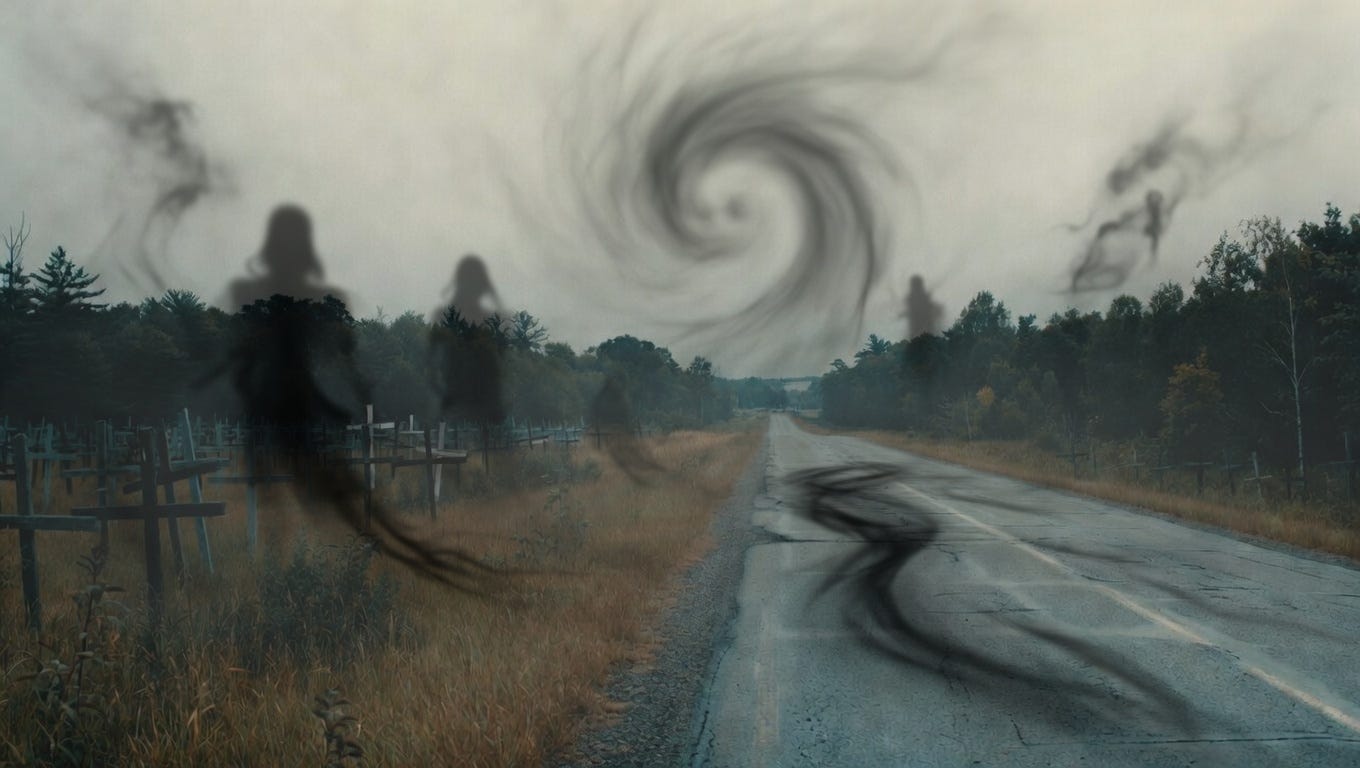
The road stretched out in front of me like a long, quiet river cutting through the woods of Northern Wisconsin. A stretch of blacktop I’d driven a hundred times in a hundred different moods. But now it felt like a minefield. Every mile marker, every tree, every patch of cracked pavement became a ghost from the past. A reminder of battles fought and scars carried.
I gripped the steering wheel so hard my knuckles turned white. I was trying to squeeze the memories out of the leather. My heart pounded. Not from speed. From a memory so sharp it tasted like smoke in my mouth and burned like acid in my throat.
Just past the graveyard. Yeah, that graveyard. That was where I used to pull over. My secret war zone. A spot to stop and light up. Chasing the dragon with meth. The smell of burnt chemicals. The sharp inhale filling my lungs. The tall grass hiding my car so I could keep one eye on the road. It all rushed back in a wave. A punch to the gut. My stomach twisted into knots. A sick, empty pit clawed its way up like a rattlesnake waking from a long sleep.
I couldn’t figure out why this stupid drive had become a trigger minefield. Why this stretch of road, which should have been just a commute to my new job in residential treatment, turned into a storm of cravings and memories I couldn’t outrun.
The ghosts of my past rode shotgun. Whispering old lies. Lighting fires in places I thought I’d buried long ago.
And there I was. White-knuckled. Shaking. Stuck in the middle of a road that didn’t just take me home. It took me right back to the edge.
This was no simple craving. It was a full-body ambush.
And it was f*cking normal.
What the Hell Are Triggers, Anyway? (Beyond the Beer Commercial Version)
Most people picture triggers as the obvious stuff. A beer commercial. A certain song. The clink of ice in a glass. Those are real. But they’re just the shiny surface.
Triggers are emotional landmines planted in the soil of your past. Hidden. Silent. Ready to explode the second something nudges the wire. They’re ghosts living in the wiring of your brain. Echoes of trauma, shame, fear, and survival tactics built when there was no other choice.
Think of your brain like an old farmhouse in the Northwoods. The walls look solid. The lights work. But under the floorboards are wires spliced together in the dark. In a hurry. During storms you barely survived. One wrong step on a loose board and the whole system lights up like it’s 3 a.m. and the house is burning again.
Or picture your nervous system as a loyal guard dog kicked too many times as a puppy. Now every time the mailman walks by (or a smell, a tone of voice, a stretch of road), the dog doesn’t just bark. It goes full attack mode. Even though the mailman is just delivering a package. That dog isn’t broken. It’s doing exactly what it was trained to do: keep you alive.
Triggers aren’t weakness. They’re your brain’s best attempt at protection. Gone rogue in recovery.
The Neuroscience of Triggers: Your Brain’s Emergency Alarm System on Steroids
Here’s the science. Explained the way I wish someone had explained it to me when I was white-knuckling that same road.
Your amygdala. The almond-shaped alarm in the middle of your brain. Acts as the bouncer at the door of your nervous system. Its only job is to scan for danger 24/7. It doesn’t think. It doesn’t negotiate. It screams “DANGER!” and floods your body with cortisol and adrenaline the second it recognizes a pattern that once kept you alive.
Your hippocampus. The librarian who files the “where, when, and how it felt” details. Smell of burnt chemicals plus graveyard pull-off plus rush of the high equals file saved under “SURVIVAL.”
When you drive past that same graveyard years later, your amygdala doesn’t read the calendar. It just sees the file and hits the panic button. Heart races. Stomach drops. Mouth tastes like smoke. Boom. Full-body ambush.
This isn’t a moral failing. This is your brain doing exactly what evolution designed it to do. In caveman days, remembering the saber-tooth tiger’s watering hole saved your life. In 2026 Northern Wisconsin, remembering the meth pull-off saves nothing. But the wiring doesn’t know that yet.
Addiction hijacks the same reward pathways that food, sex, and safety use. Dopamine doesn’t care if the “reward” destroys your life. It just wants the hit. Triggers are the brain’s way of saying, “Hey, remember the last time this pattern kept you alive? Let’s do that again.”
You’re not crazy. You’re not weak-willed. You’re a human with a brain that learned too well how to survive.
Triggers Are Personal Maps of Pain — Yours Are Unique, and That’s the Point
What hits you like a freight train might be background noise to someone else. That’s why one person can walk past a liquor store without blinking while another has to cross the street and still feels their skin crawl.
Your triggers are a custom-drawn map of every wound. Every survival tactic. Every moment you had to become someone else to stay alive. Rural kid who learned to disappear? Certain silences trigger you. Urban survivor who used substances to numb street noise? Loud parties might feel like safety. Until they don’t. LGBTQ+ person who hid their truth? A certain tone of voice can feel like coming out all over again. Native brother or sister carrying generational trauma? A smell from ceremony mixed with old pain can floor you.
These aren’t random. They’re data. They’re the hidden story beneath the surface that your brain is still trying to rewrite.
The Day-to-Day Reality: When Triggers Sneak Up and Steal Your Progress
Triggers don’t announce themselves with a neon sign. They show up as that sick, empty pit in your stomach on a perfectly normal Tuesday. White-knuckle driving past a place you swore you’d never think about again. Sudden rage at a song on the radio that used to be “our song.” The urge to isolate, numb, or lash out when everything was actually fine five minutes ago.
And then the shame spiral kicks in. I should be further along. I’m failing. Everyone else has their shit together.
Sound familiar?
You’re not alone in that spiral. I’ve been there. My clients have been there. The people reading this right now are nodding along with tears in their eyes.
Triggers don’t mean you’re broken. They mean you’re healing in the messiest, most human way possible.
You’re Not Alone — Triggers Are F*cking Normal from A to Z
Let me say it louder for the people in the back:
Whatever you’re feeling when a trigger hits is fucking normal.
Every single person in recovery has them. The CEO in the suit. The single mom in the trailer. The kid who just got out of juvie. The elder carrying residential school trauma. The counselor who’s supposed to have it all figured out (hi, it’s me).
Triggers are the common thread in our hidden stories. They’re the proof that we survived things that tried to kill us. They’re the evidence that our brains are still fighting for us, even when we’re fighting ourselves.
You’re not weird. You’re not behind. You’re right on schedule. The messy, millimeter-by-millimeter schedule that actually works.
Turning Triggers Into a Map to Healing (Instead of a Road Back to Hell)
The game-changer moment comes when you stop running from triggers and start listening to them.
They’re clues. Signposts. Little flares saying, “Hey, this part still hurts. This part still needs care.”
Start small. Name it out loud (or in your journal): “That graveyard stretch just hijacked me.” Breathe through the body sensations instead of numbing them. Ask the gentle question: “What younger version of me is still trying to protect me right now?”
Then layer in the tools that actually stick. Therapy that honors lived experience. Somatic work that gets the rattlesnake out of your stomach. Mindfulness that doesn’t feel like toxic positivity. Community that gets the mess instead of preaching perfection.
You don’t have to do it alone. That’s why I built Progress is Progress the way I did. One-on-one coaching that meets you exactly where you are. Group circles where nobody has to pretend. This Substack where we talk about the real shit. And the Skool community for that private, members-only space with live workshops, practical tools, and genuine connection.
Ready to Take the Next Millimeter?
If this post made something click. If you felt seen. If you’re tired of white-knuckling it alone. If you’re ready to turn your triggers into a map instead of a trap. I’m right here.
Drop your story in the comments. Tell me what trigger surprised you this week. Share this post with someone who needs to hear “you’re not alone.” Hit subscribe so you never miss the next raw, honest deep dive.
And if it’s time to do the work with someone who’s been exactly where you are (licensed, lived experience, zero judgment, cash-only so there’s no red tape), head over to www.progressisprogressllc.com and book that free 50-minute introductory session. No pressure. Just a real conversation to see if we’re a good fit.
Let’s talk. Let’s map it out. Let’s keep moving. Mile or millimeter.
You’re already further than you think.
Progress is progress.
Always.
Belinda “Belle” Morey, BS, CSAC
Recovery Coach & Licensed Clinical Substance Abuse Counselor
Progress is Progress LLC
📍 Arbor Vitae, WI (serving Northwoods & virtually everywhere)
📞 Text or call 715-892-5310
📧 progressisprogressmilormil@gmail.com
🗓 Book your free intro: www.progressisprogressllc.com
📬 Substack community: progressisprogress.substack.com
🌟 Skool recovery space: https://www.skool.com/progress-is-progress-coaching-3648/about