

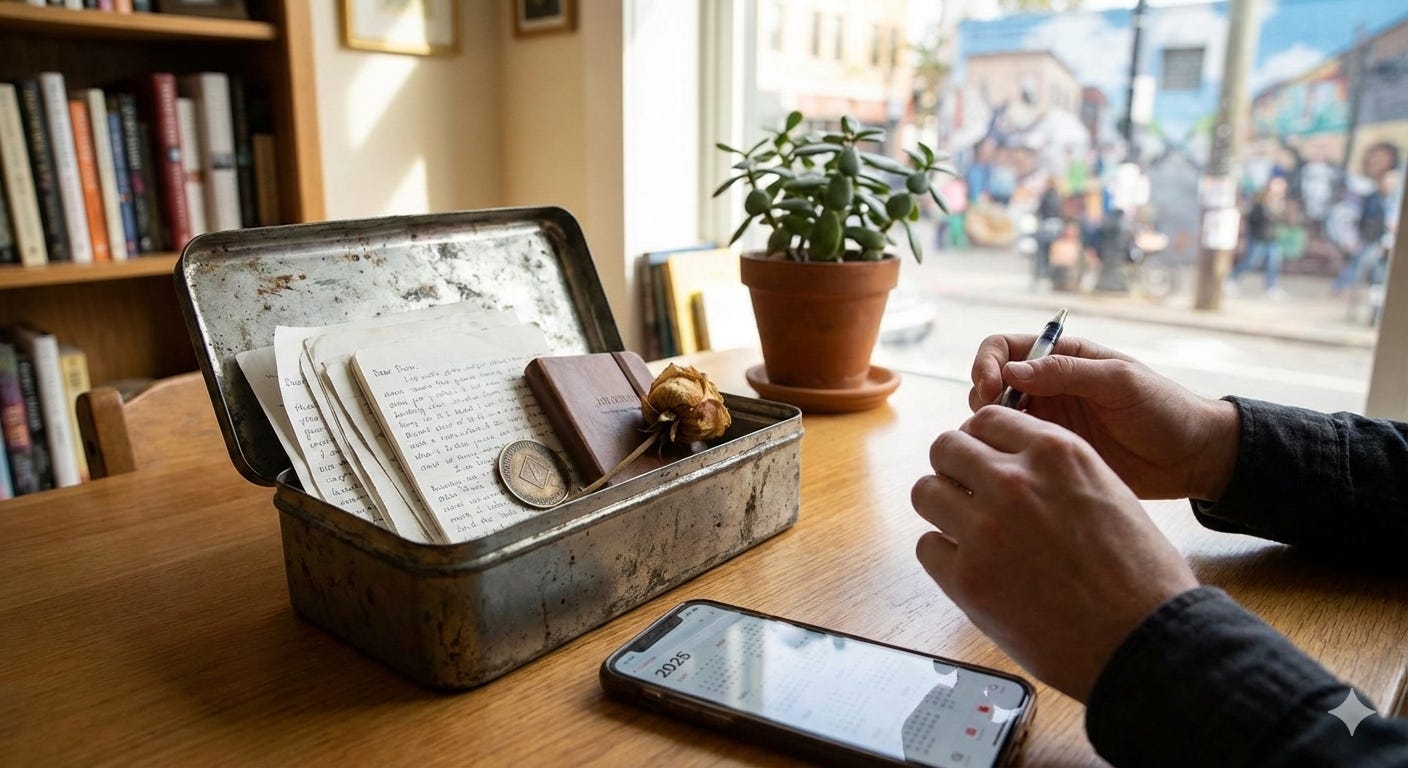
So, here we are again. It’s January, the world’s pretending we have a “fresh start,” and you—if you’re anything like me—are dragging last year’s mismatched socks into the new one. I used to joke that my superpower was just not quitting. It’s starting to feel truer every year.
You want the glossy version, scroll Instagram. This is the year-in-review no one asked for but everyone secretly needs.
Let’s crack open the 2025 time capsule and see what survived, what broke, and why the future of healing is a glorious, techy, deeply human mess.
AI Got Smarter—But So Did We
Remember a couple years ago, when talking to a robot about your relapse felt like science fiction—or a bad trip? Now my phone knows my triggers before I do. We saw AI chatbots become legit lifelines in 2025, not replacing therapists, but joining the late-night lineup for anyone negotiating sobriety, grief, or just chronic existential dread.
This year, AI didn’t just show up in the therapy room. I work with a couple of online recovery apps and, let me tell you, “digital support” is now way more than a library full of PDFs. AI helps me do case notes (hallelujah), creates treatment plans that aren’t just bland templates, and the best part—it actually keeps real-time tracking on client moods or red flags. For a counselor juggling too many cases and too much paperwork, that’s not just a “nice to have,” it’s a real safety net.
We have AI-powered notifications, custom reminders for goals, and feedback that feels almost (but not quite) like a coworker who actually gets you. AI is getting more realistic by the month, offering nuance and, sometimes, a surprising level of empathy. Is it ever gonna fully replace being face-to-face in a room with a real person? Hell no. But as an option? It’s brilliant. It opens a door for the client who can’t make it to the office today, or who doesn’t want to turn on their camera, or who just needs something, anything, at 1 AM.
Clinicians and directors, this is your moment: Are we going to let that tech be something “out there” or are we actually going to use it to make our services better, faster, and more real? How might AI actually support your practice, your staff, your sanity—for once, not as a threat but as a tool? If you’re on the fence, here’s your nudge: Explore. Experiment. No, it won’t make you a robot, but it might save your license…or your energy.
Clients and folks in the field—what are your best and worst experiences with AI in recovery this year? Does it make things feel more accessible, or more distant? What’s the craziest thing you’ve ever texted to a chatbot at 3am… and did it help?
Digital Recovery Means You Never Have to Wear Pants (But You’ll Still Get Dragged)
2025 made online support groups, trauma podcasts, and “sober TikTok” more normal than face-to-face meetings. The group therapy scene blew wide open: it’s not just 12-step anymore (and credit where credit’s due, 12-step built the road we’re on). Now, you can log into a group about anything: harm reduction, neurodivergent living, grief, attachment, crafting, even recovery for those who hate talking. There are groups designed for introverts who want to lurk but not participate; there are 5-minute drop-in groups for the lunch break crowd. Hell, you can even attend art therapy or listen to a group audio session while folding your laundry at 2am.
Don’t like talking? No problem. There are silent accountability groups, text-chats, “listen only” modes, even meme-sharing recovery spaces. Want to blend faith, science, and TikTok humor? That’s a group now too. Magic of these digital offerings is that anyone—busy parents, shift workers, people with disabilities, those managing chronic illness or addiction or trauma—can tune in where they are.
If you’ve never tried it, why not swap that smoke break for a “recovery blast” on your app of choice, just 15 minutes to reset? And 24/7 support means bad moments don’t have to become worse nights. In the new world, healing can start (and restart) at any moment, not just at 7:00 PM on a Thursday.
Clinicians, let’s be real: Working from home is both a blessing and a curse. Yes, it saves on commute, gives you flexibility, and lets you wear pajamas—sometimes. But are we losing connection? Are we finding ourselves drained more easily because we never actually “leave” work? Is professionalism shifting, or just evolving? Add your pros and cons, because hybrid living is here to stay.
Messy Real Life, Upgraded
Tech won’t do your inner work for you, and it sure won’t make your grief prettier. My own messy, triggered, absolutely exhausted recovery journey this year? Still the work of showing up, falling on my face, recalibrating, and trying again. I built my own digital “recovery ritual”—journaling by talking out loud, alarms that signal breaks, group chats with both counselors and clients, and a playlist that carries me through angry, anxious afternoons.
For clinicians: please, please consider putting as much creative energy into your own self-care plans as you ask your clients to devote. Borrow from the toolbox—use that group chat, get yourself an app that tracks your own moods, or get weird with embodied check-ins you can actually stick with. The best thing about all this digital innovation is that it lets both helpers and clients hack their well-being in a way that works for their actual, lived reality.
What Did We Actually Learn?
Here’s where we make it real: Recovery tactics are like pizza. You can’t “copy-paste” your best friend’s order and expect to be satisfied. What works for me might make another person throw their phone out the window. We are done pretending any recovery or self-care method is “the one right way.”
Personalization is survival. Now, our tools let us blend—AI mood tracking plus old-school phone calls, memes with mindfulness practices, video groups, writing workshops, meetups and memes and marathons with strangers-turned-family.
Question for everyone: What did you try this year that surprised you? Did an app, a text group, or even the “old stuff” save your sanity—or drive you bonkers? Did you rediscover a “retro” healing technique that knocked your socks off?
Hybrid Is the Future
We’re never going all-the-way back to brick and mortar, and we’re never going all-the-way online. The future of recovery—and support of any kind—is hybrid. For every chronically online connection, you need a grounding, in-person hug now and again. For every great group Zoom, you need real air, real people, real hugs. (Or high-fives or fist-bumps or non-touch affirmation, whatever your sensory system prefers!) Lean in to both, because healing needs all of it.
Community Never Goes Out of Style
With all this innovation, here’s the bottom line: No app can replace the moment you find someone else who has been there, who actually sees you and means it. Support is more than platforms—it’s feeling understood, finding your people, and allowing yourself to be known.
Let’s get creative with how we find and offer support. Try the new stuff, but don’t abandon reaching out to a person you trust, even if you think it’s “awkward.” There’s still magic in hearing, “You are not alone”—from a fellow human. Take a risk and share your truth, digitally or face to face. Let yourself belong where the messy people are.
Calling In the Helpers, Calling Out the Real Ones
Therapists, peer supporters, “helpers”—the world needs us as real humans, not just as polished professionals. This is the time to speak up honestly: Did you get enough self-care? Did you say “no” when you needed to, or did you white-knuckle through burnout? What would you like to see in recovery/human-services work next year? For clients: do you feel your counselors “show up” as real people, or do the screens get in the way?
My hope for 2026: Let’s make the helping fields more honest, more sustainable, and more deeply personal. Lived experience should be valued as much as any credential. If you’re reading this and you’re a “helper,” resolve to nourish yourself so you can actually help—and tell others how you do it. It matters.
Your Turn: What’s in Your Time Capsule?
Let’s co-create progress. Tell me (and each other!) what you learned, what broke, what patched itself up. What were your good, bad, ugly, beautiful moments this year? What practices, tech tools, support systems, or old-school practices got you through the thick of things?
Questions for reflection:
What new recovery tool or community surprised you this year?
Where did you find support you weren’t expecting?
What didn’t work at all?
What’s your secret survival tactic—digital, analog, or otherwise?
Helpers: How did you protect your own mental health? Did you actually get enough self-care?
Wrapping Up the Year—And Unpacking the Next
2025 asked a lot of us. We all had moments—maybe weeks or months—where “showing up” was the only metric of progress. But still, we survived. We adapted. We let technology upgrade us but refused to let it take our humanity.
Here’s what I want for us all in 2026: more mixing, more risk-taking, more creativity in how we heal and help. Let’s commit to curiosity instead of judgment, to supporting one another in the actual complexity of recovery and real life. Let’s be honest about what drains us and what fills us up. Let’s build new traditions and keep the ones that still work. Let’s hold each other accountable—not to perfection, but to authentic effort, to messy progress, to a few more good days and a few more honest moments.
If you’re ready for the next round, subscribe, share your story, comment below—help me keep this conversation real and human.
Here’s to the mess, the magic, and the miracle of just not quitting.
—Belle
(If you’re new here, click subscribe: Progress is Progress for radical honesty, practical recovery, and real human messiness. No spam, just survival tips and the occasional gut-punch revelation.)
okay first of all: mismatched socks made me feel extremely seen.
this feels like healing with snacks, apps open, pants optional, and everyone doing their best. AI as the 1am backup friend, recovery like pizza with weird toppings, and the main superpower being not quitting — yes. that’s the real flex.
also “digital recovery means you never have to wear pants” is a public service announcement.
i really like how this keeps saying tech is a tool, not the hero. people still matter. hugs still matter. showing up half-tired still counts.
big messy exhale of a piece. it made me feel less alone in the chaos.
I love this perspective on technology and recovery and the "metrics" of progress. I definitely want to be more adventurous in the new year.