


Stop Chasing Perfect—It’s a Trap 🎭
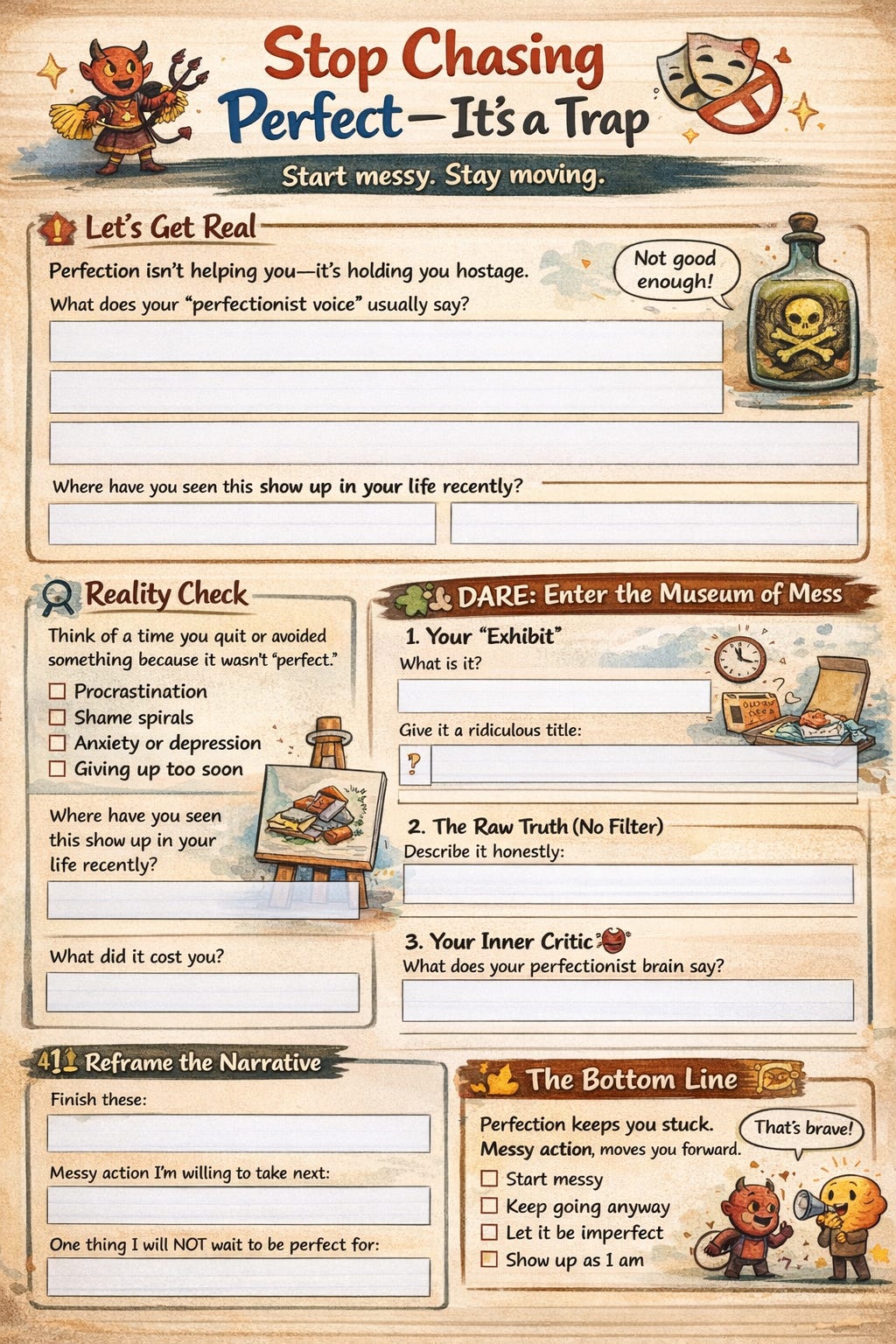
Let’s get real. You’ve been sold a lie: “Try harder. Be perfect. Get your act together.” Supposedly, everything gets easier when you do. Here’s the truth—perfection is a moving target fueled by fear and shame. It keeps you stuck, not safe.
Perfectionism isn’t a motivator. It’s a prison guard in a cheerleader’s costume, whispering:
“If you can’t do it right, don’t bother.”“If you mess up, just quit.”“Everyone’s watching—never let them see the cracks.”
Don’t buy it. These aren’t facts. They’re lies designed to freeze you in place.
Why You Need to Care 🧠⚡
Perfectionism is poison, especially if you’re in recovery or trying to grow. Here’s what it actually delivers:
Paralysis and procrastination.
Shame spirals that sabotage progress.
Anxiety, depression, and isolation.
That feeling of being the only one screwing up.
Ever bailed on a meeting because you missed the last one? Quit a diet after one cookie? That’s perfectionism, and it kills progress way more than any “mistake” ever will.
My Story—Unfiltered 🗣️💢
I tried chasing “perfect recovery.” I hid relapses, waited for the perfect moment to start again, and nearly lost everything. Freedom didn’t come when I became flawless—it came when I owned my mess and kept moving, ugly wins and all.
You don’t have to be “ready.” You don’t have to be “good enough.” Start messy. Stumble forward. That’s real progress.
The Science (Yep, It’s Real) 🔍⚖️
Your brain hates mistakes and uncertainty. Shame lights up the same brain areas as physical pain—no wonder perfectionism hurts. When you chase perfect, your brain ignores all progress and only scans for flaws. Result? Stuck.
DARE: Enter the Museum of Mess 🎨🖼️
Ready to break the spell? Here’s your mission:
Find something you usually hide because it’s messy, imperfect, or embarrassing. Could be your inbox, a relapse, a pile of laundry—anything.
Snap a photo or write the rawest, most honest description you can muster. No filter.
Give it a ridiculous “museum exhibit” name. Examples: “The Great Pile of ‘I’ll Get to It Someday’” “Relapse Remembrance, 2025, Mixed Media” “Emails That No One Deserves to Read”
Write down what your perfectionist brain says about it. Then write what you’d say to a friend showing you their mess.
Why? Because exposure breaks shame’s grip. When your mess gets air, it loses its power.
What Happens Next 🔥😬
You’ll want to hide, bail, or laugh it off. That’s your perfectionism showing up—keep going. You might feel silly or relieved. You might actually laugh. That’s progress.
Real Examples:
“My museum piece is my junk drawer. My brain says, ‘You’re lazy.’ I’d tell a friend, ‘You’re just busy.’”
“I wrote about a slip I had. My brain: ‘Total failure.’ Friend voice: ‘You’re human, and you’re trying.’”
If This Feels Overwhelming 🤯🆘
Pause. Breathe. You’re not alone. Reaching out is strength, not weakness.
Need support? Book confidential coaching at www.progressisprogressllc.com
DM me anytime for a reality check. Remember: progress means knowing when to ask for help.
Resources for the Brave 📚✨
Brené Brown’s TED Talk: “Listening to Shame”
“Perfectionism as a Clinical Issue”
The Bottom Line: Start Messy. Start Now. 🎉💪
Perfection is a myth designed to keep you small. Progress happens when you show up—mess and all. Don’t wait. Step into the mess, own it, and prove to yourself you’re already enough to begin.
🔥 Your Dare: Do your “Museum of Mess” and bring it back here. No judgment. Only progress. 👊