

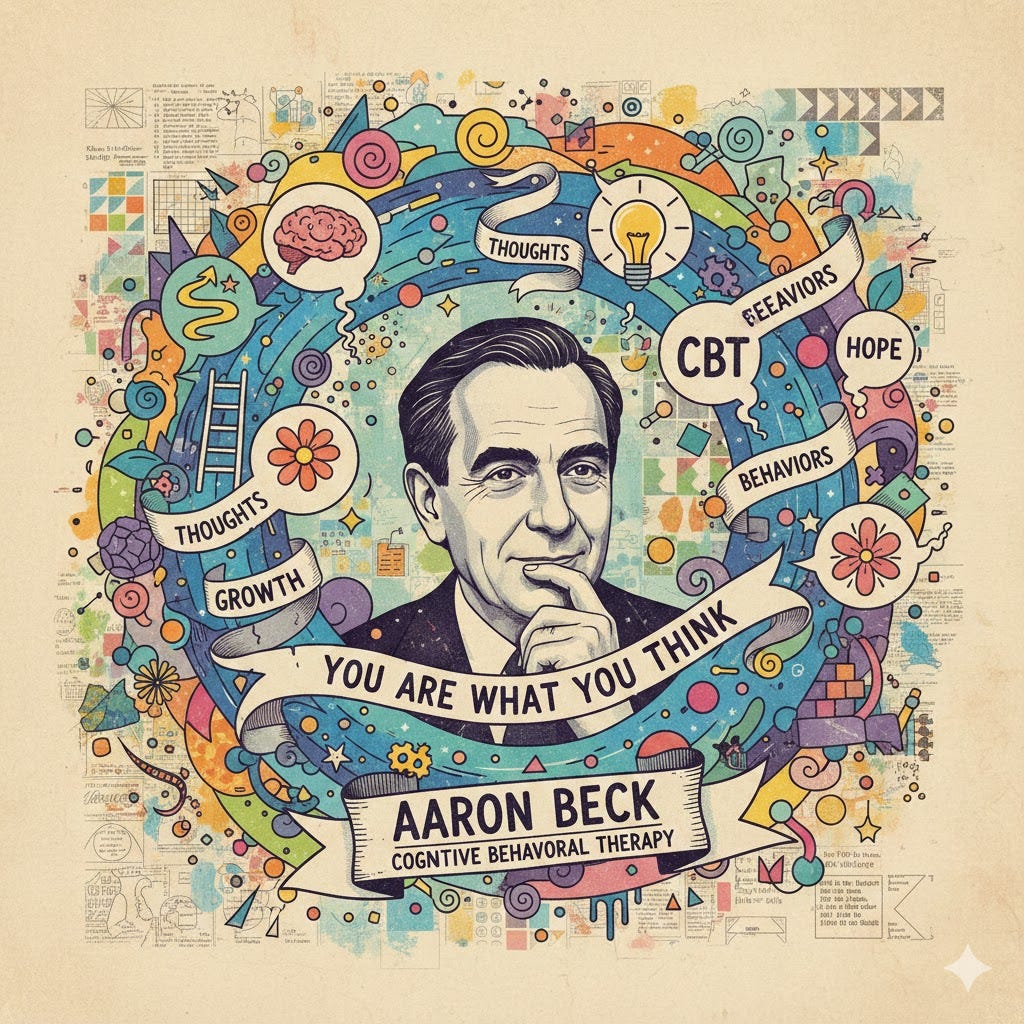
It’s 1959. A psychoanalyst who doesn’t look like much—quiet, serious, doesn’t buy his own hype—leans forward in his chair. He levels with the patient in front of him. Instead of some mystical probing into childhood rage or mining for dream gold, he asks the simplest question anyone can ask:
“What are you actually thinking?”
What happens next doesn’t just change that day or that patient. It cracks open the ossified world of mental health care—flinging open a window where the air has felt thick and stale for decades. Aaron Beck isn’t looking for hidden rage. He’s not waiting for some Hollywood-style “aha” moment. He’s listening to what’s right in front of him. And for a lot of us, that’s what makes all the difference.
