
One Week After Termination:
Now What? The Raw, Real, Ruthless Truth and the Road Ahead

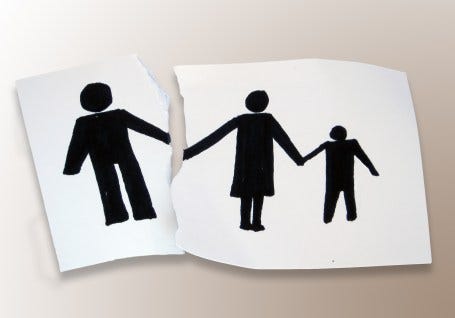
It’s been just over a week since the court date when my kids’ dad didn’t show. Since the judge signed off and ripped his parental rights away. You’d think liberation would feel like a clean break—a sharp exhale after years of holding your breath tight against fear, hurt, and chaos. But the damn truth? Liberation feels like a crater-sized hole in your chest where your heart used to live. It feels hollow and numb but every once in a while punches you in the gut so hard you double over. It’s relief and grief slamming into each other in a brutal, confusing dance.
I still don’t fully know how I feel. Mostly, I feel fucked up. Angry. Exhausted. Somehow calm but on edge—like I’m moving through a fog of survival that doesn’t allow me to process any of this for real.
A raw part of me wants to reach out and unload every damn ounce of venom I’ve been bottling for years—telling him exactly what a waste of a father he’s been, calling him every name I’ve cataloged through sleepless nights and therapy sessions. “Look at you, the man who couldn’t even fight for your kids when it counted the most.”
But then I catch myself. Because, honestly? I was never black and white about him. I didn’t want him to disappear from their lives, not if he could show up for them—even imperfectly. The boys deserved the best version of their dad, no matter the demons he wrestled. Yet he chose absence. And that absence slices into your soul in ways no therapist’s couch can always fix.
So where the hell does that leave me now? What comes next after the gavel falls and a chapter closes?
The Heavy Calm That Isn’t Peace
The quiet I’m living with now isn’t peace. It’s the eerie, heavy calm of knowing I probably won’t have to talk to him again. That’s terrifying and freeing all at once, crumpled up inside me like a fist I can’t open. But as a mom—and a counselor who’s spent years walking through hellfire with others—the fight is just beginning.
The court ended his legal rights, but the real question lingers, louder than ever: What happens to the kids?
This is where my two worlds collide—the mom who feels the raw weight of loss, and the counselor who knows what trauma and addiction can do to a family for generations.
I believe—no, know—that kids deserve their parents as long as it’s safe. So I’m building walls that say: If you want back in, you get sober first. You get your mental health in order. You stop being chaos and start being adult. You show up—not halfway, not for appearances, but fully and wildly and honestly.
This isn’t just my fight. It’s theirs. My kids deserve real adults who fight for them, not ghosts who vanish when it gets hard.
Our Culture Holds Us: Tribal Identity and the Sacred Power of ICWA
My kids and these two men are tribal members, which means this isn’t ordinary family drama. It’s wrapped in the sacred, in history and duty and generations of pain and resilience.
The Indian Child Welfare Act (ICWA) isn’t just legal mumbo jumbo. It’s one of the few laws born out of respect—respect for tribal sovereignty, for native culture, and for the idea that kids must belong to their community to heal fully.
ICWA demands tribes have the say in custody and adoption cases involving their children. It prioritizes placing Native kids with family or tribal members because identity and connection are survival.
For us, the legal adoption by my husband isn’t just papers on a desk. It’s reclamation. It’s narrative repair. It’s roots holding tight to my boys’ spirits in a world hell-bent on ripping them away.
Addiction, Narcissism, and the Real, Dirty Mess No One Prepares You For
Let me be blunt: addiction isn’t neat. It’s wrapped tight in years of trauma, untreated mental illness, and yeah—sometimes selfishness and narcissism that make accountability so slippery it feels impossible to catch.
I remember hearing the guardian ad litem report that my ex said, “I don’t have time to talk to you.” That line hit me like a fist to the gut—for my boys who needed their father, and for every kid whose parent lets addiction swallow up every part of their life.
“Don’t have time” isn’t just laziness. It’s drowning. It’s being washed over by shame, chaos, and a world that shoves you deeper down rather than handing you a rope.
For parents stuck in incarceration or battles with the criminal justice system? They’re not just fighting addiction—they’re fighting stigma and broken systems that make healing feel miles and miles away.
Saying this as a counselor and a woman who has stood in those trenches myself: recovery is a battlefield littered with landmines and scars you won’t see.
The Counselor’s Truth: Real Healing Is More Than Just Not Using
From the counseling chair, it’s crystal clear—quitting drugs or booze is just step one. The core work is rebuilding a brain and life fractured by trauma and addiction.
Trauma-informed care, the latest gold standard, centers on safety, trust, empowerment, and peer support—especially vital for parents fighting reunification (SAMHSA, 2019; NCSACW, 2022).
Men rebuilding fatherhood after addiction face an uphill climb requiring mental health support, stable housing, and consistent accountability—not just clean time (Stanley, 2023).
So my ex’s next steps aren’t about wiping the slate clean in a day—they’re about tending to the whole, broken self over the long haul.
Real Talk: If He Sat Across From Me as a Client, Here’s Exactly What I’d Say—and Why It Still Cuts Me Deep
Even with my clinical knowledge, years in recovery, and experience walking with others through hell? This shit still punches my heart.
Here’s the raw truth I’d lay down:
Your trauma isn’t an excuse, but you can’t heal without facing it. Pain passed, pain inherited, poison that chains families for generations.
Sobriety is not a badge or an event. It’s a daily war you win or lose moment to moment.
Show up—not occasionally, rarely, or when it’s convenient—but fully and with honesty.
Trust isn’t given, it’s earned in the real world, day by day, truth by truth.
Healing culture is medicine. Reconnecting with your tribal roots is survival, not optional.
Why does this hit me hard? Because I know the fight inside too intimately. I’ve fallen, screamed, begged, and clawed back to human. I am no untouchable counselor—I am a woman with fresh scars and worn bones who understands what’s really at stake. That’s why my accountability isn’t cold, it’s fierce and soaked in love.
For the Kids, Partners, Families Caught in This Wreckage
If you’re standing on the sidelines—partner, family member—supporting someone fighting addiction and trauma, you’re in a war zone.
Here’s what I want you to hear:
Set your boundaries like your life depends on it—because it does. Protect yourself, protect the kids.
Get educated. Addiction is a beast with claws but also claws you can learn to hold back.
Burnout is real and brutal. Find your tribe. Get your therapy, your breaks, your lifeline.
Celebrate every tiny victory. It all fucking counts.
Hold hope tightly but carry reality in your back pocket. Love doesn’t fix everything; people have to do the work.
What We’re Doing Now: The Gritty, Beautiful Next Moves
We’re hammering away at legal work—adoption, new names. This is stability stamped on paper.
We’re weaving new rhythms at home. The day my boys started calling my husband “Dad” without a second thought? Priceless.
Therapy is a non-negotiable. Family, individual, couples. None of us heal alone.
Emotionally, I’m checking my boys like a hawk. “I’m fine” can hide everything.
Resources That Keep Us Grounded
SAMHSA’s trauma-informed care toolkit: https://www.samhsa.gov/trauma-violence
NCSACW’s guides on parenting and addiction: https://ncsacw.acf.hhs.gov/topics/trauma-informed-care/
National Indian Child Welfare Association (NICWA) on ICWA: https://www.nicwa.org/what-is-icwa/
Al-Anon and Nar-Anon peer support groups
Tribal cultural healing programs integrated with addiction recovery
Let’s Get Real: Share the Pain, Share the Hope, Start the Conversation
If you’re reading this—whether you’re a parent stuck in this hell, a counselor holding space for others, or a family member trying to survive the fallout—I want you to know this:
Your story matters.
Your pain is seen.
Your hope is real.
What’s burning inside you? What’s tearing you up, and what’s lifting you just enough to keep going?
What do you wish someone told you?
I want to hear your truths. Your rage. Your love. Your despair. Your jokes and your raw, ugly cries.
This isn’t my story alone. It is ours to own, to share, and to heal.
Break the silence. Rip apart the stigma. Hold nothing back.
Because real progress isn’t neat. It isn’t tidy. It’s bloody, ragged, furious, sometimes painfully beautiful—and it’s all we have.
And that’s more than enough.
References
Substance Abuse and Mental Health Services Administration (SAMHSA). (2019). Trauma-Informed Care in Behavioral Health Services. https://www.samhsa.gov/trauma-violence
National Center on Substance Abuse and Child Welfare (NCSACW). (2022). Trauma-Informed Care Resources. https://ncsacw.acf.hhs.gov/topics/trauma-informed-care/
Stanley, S. (2023). Fatherhood Engagement in Substance Use Recovery: A Systematic Review. Journal of Substance Abuse Treatment, 150, 108869.
National Indian Child Welfare Association (NICWA). (n.d.). About ICWA. https://www.nicwa.org/what-is-icwa/
Laudet, A. B. (2018). The Advantages of Participating in Recovery Support Services. Journal of Substance Use Disorder, 35, 1-11.
Health Partners. (2023). How to Support Someone Through Substance Use Recovery. https://www.healthpartners.com/blog/how-to-support-someone-through-substance-use-recovery/
This is beautifully written, and the way you describe the dis-ease is spectacular. I know a bit about everything you've shared. Let's just say I'm a double winner if you are familiar with the term. Again, thank you 🫶🙏🏼🧘🏻✨🌖
2/10/06 😊
I felt like my heart was doing somersaults and then sitting down very seriously for a moment.
I keep thinking about how she holds relief and grief at the same time like two heavy grocery bags and refuses to drop either one. That feels brave in a very human, very tired way. And the fierce love for her kids? It’s big, loud, protective energy wrapped in tenderness—I felt that in my bones...
I also love how she doesn’t pretend healing is neat. It’s messy, jagged, full of rules and hope and “we’re doing our best today.” That honesty feels like someone sitting next to you on the floor and saying, yeah, this is hard—and you’re not alone.
I finished this feeling shaken but steadied, like truth can hurt and still hold you at the same time—and that kind of sharing really matters...