

I’ve sat with countless people in recovery who described the same exhausting pattern. They’d tried everything, meetings, steps, sponsors, residential programs, and still felt like they were failing at something everyone else seemed to manage. The groups felt overwhelming, the rigid schedules made their brains short-circuit, and the expectation to sit still, share feelings on command, and “just follow the program” left them more drained than before they started.
They weren’t lazy, they weren’t resistant, their brains were simply wired differently.
If you’ve ever felt like you got a different operating manual for being human, if the standard recovery tools never quite landed, if the noise and lights and social demands of meetings felt like static in your skull, this piece is for you.
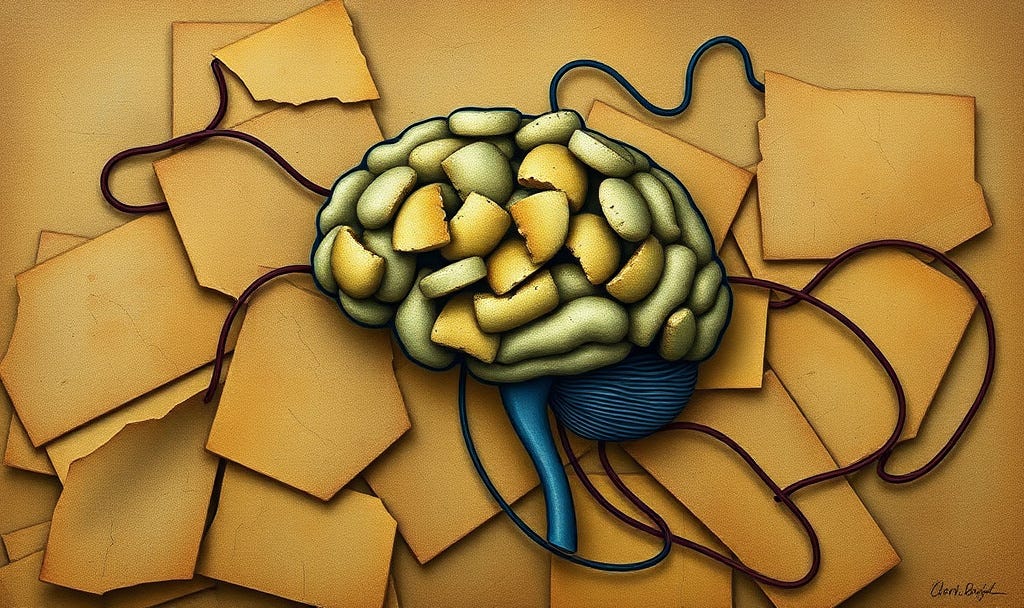
Your brain was never broken. It was just wired differently.
And that difference is not a flaw to be fixed, it’s information we finally need to start honoring in recovery spaces.
The Intersection That Changes Everything
The research is clear and growing,
People with ADHD are significantly more likely to experience substance use disorders, often turning to substances to quiet racing thoughts, manage executive function struggles, or handle emotional dysregulation.
Autistic individuals face substantially elevated rates of substance use, frequently as a way to self-medicate overwhelming sensory input, social anxiety, or the exhaustion of constant masking.
When ADHD and autism co-occur (sometimes called AuDHD), the overlap with addiction risk becomes even more pronounced.
This isn’t about moral weakness or lack of willpower, it’s about brains that experience the world more intensely, brighter lights, louder sounds, stronger emotions, different social processing, and executive function challenges that make starting, stopping, planning, and sustaining routines feel like fighting gravity.
Substances often step in as a brilliant, if temporary, solution. Stimulants can create focus where there was chaos, alcohol or cannabis can dial down sensory overload or social anxiety. The relief is real, until it isn’t. Then the cycle tightens.
Standard recovery environments, built around neurotypical assumptions, frequently miss this entirely. Crowded rooms with fluorescent lights, unpredictable social dynamics, long verbal processing sessions, and rigid schedules can feel like another form of overload rather than healing. Many people leave treatment feeling more broken than when they arrived, not because they don’t want recovery, but because the tools weren’t designed for their nervous system.
Breaking the Shame and Stigma
There is a particular shame that settles in when you realize, or suspect, you’re neurodivergent while in recovery.
The internal voices say things like,
“I should be able to do this like everyone else,”
“If I really wanted it, the meetings would work,”
“I’m just making excuses.”
No.
These needs, for quieter spaces, movement breaks, visual supports, concrete instructions, or different ways of processing, are not character defects. They are data. Your nervous system is speaking clearly. The shame around how your brain works is what we actually need to quit.
In the rural Northwoods communities I serve, where resources can be limited and isolation is part of daily life, this shame can feel especially heavy. There isn’t always a specialized program down the road, so we get creative. We individualize. We stop pretending one approach was ever going to fit everyone.
How Neurodivergence Shows Up in Recovery (The Real Picture)
It often looks like,
Time blindness making consistent meeting attendance feel impossible, even when you desperately want to show up,
Sensory overload in group settings leading to shutdown or the need to leave early,
Executive function struggles turning simple routines into overwhelming battles,
Hyperfocus followed by complete burnout cycles,
Masking so hard in treatment that you have nothing left for actual life outside the program,
Self-sabotage when things start feeling “too good” or too unpredictable.
None of this means you want recovery less. It means the path needs to meet your brain where it actually lives.
Tools and Experiments You Can Make Your Own
There is no universal neurodivergent recovery plan, the power is in experimenting and individualizing until it fits. Here are some practical, creative approaches that many people find helpful, adapt, remix, or discard as needed,
Body Doubling for Executive Function Support
Tackle tasks (journaling, meal prep, making calls) while another person is simply present, either in the room or on a silent video call. It externalizes motivation and accountability without adding pressure. Find a recovery friend who understands or use low-key online spaces.
Sensory Regulation Kits
Build a small, portable set of tools, noise-canceling headphones or earplugs, sunglasses, a favorite texture or fidget item, something with a calming scent, or a weighted object. Use before, during, or after triggering situations. This isn’t avoidance, it’s giving your nervous system what it needs so you can actually engage.
Visual and Concrete Supports
Timers with clear visual countdowns, color-coded calendars, written or picture-based checklists, and breaking every task into the smallest possible first step. What feels like “structure” for one person can feel like freedom for another, or the opposite. Test and adjust without self-judgment.
Flexible Connection Options
Online meetings with camera off. Smaller groups or one-on-one peer support. Walking meetings. Written shares instead of verbal. If traditional circles don’t work, seek, or help create, spaces that do. Harm-reduction and neurodivergent-friendly online communities can be lifelines.
The 90-Second Pause Protocol
When an urge or overwhelm hits, set a 90-second timer and do one regulating action, cold water on your wrists, paced breathing, naming five things you can see or touch. It creates a small gap between impulse and action, giving your brain a chance to choose.
Story Remixing for Shame Spirals
When the old narrative starts (“I’m too different, too broken, not trying hard enough”), pause and rewrite it, “My brain is seeking regulation the best way it knows right now. What does it actually need in this moment?” This turns self-criticism into curious problem-solving.
Daily Anchors That Honor Your Wiring
Choose 2 to 3 tiny, non-negotiable practices that feel sustainable, morning light exposure with protein, a short movement break, a specific playlist that signals safety. Make them sensory-friendly and concrete. Consistency in small things beats intensity every single time.
Medication can also be a valuable tool for many with ADHD when properly prescribed and monitored alongside recovery work. The outdated fear that stimulants automatically equal relapse doesn’t hold up for correctly diagnosed individuals. Collaborate with providers who understand both neurodivergence and substance use.
You Get to Design a Recovery That Fits
There is no perfect, one-size-fits-all neurodivergent recovery program waiting out there. There is only the one you build, piece by messy piece, with people who refuse to pathologize the way your brain works.
Some days it looks like headphones and a written share instead of a circle.
Some days it looks like canceling plans and sitting in quiet.
Some days it looks like asking for the lights to be dimmed and not apologizing for the request.
That is not “less than” recovery. That is recovery.
Your brain was never the enemy. The shame around how it operates is what we need to release.
You are not broken.
You are wired for a different kind of brilliance, and you deserve a recovery path that honors that.
Progress is progress, mile or millimeter, loud or quiet, masked or unmasked.
What part of your experience with neurodivergence (your own or supporting someone else) feels important to name right now? What one small experiment could you try this week? Drop it in the comments. Let’s make this space one where different isn’t a deficit, it’s just data.
Disclaimer: All client examples in my writing are composite, anonymized illustrations drawn from common patterns I see in practice. No identifying information is ever shared, and confidentiality is always protected. This post is for educational and supportive purposes and is not a substitute for individualized professional care.
If this resonates and you’re ready for recovery support that actually accounts for how your brain works, whether you’re neurodivergent, supporting someone who is, or simply tired of one-size-fits-all approaches, book an intro call at ProgressIsProgressLLC.com. First session is free. We build it for you.
Keep progressing,
Belle