
Michigan Border Cannabis Run 2026: Ironwood Dispensaries, High-Potency THC Products, Mental Health, Recovery & The Real Risks

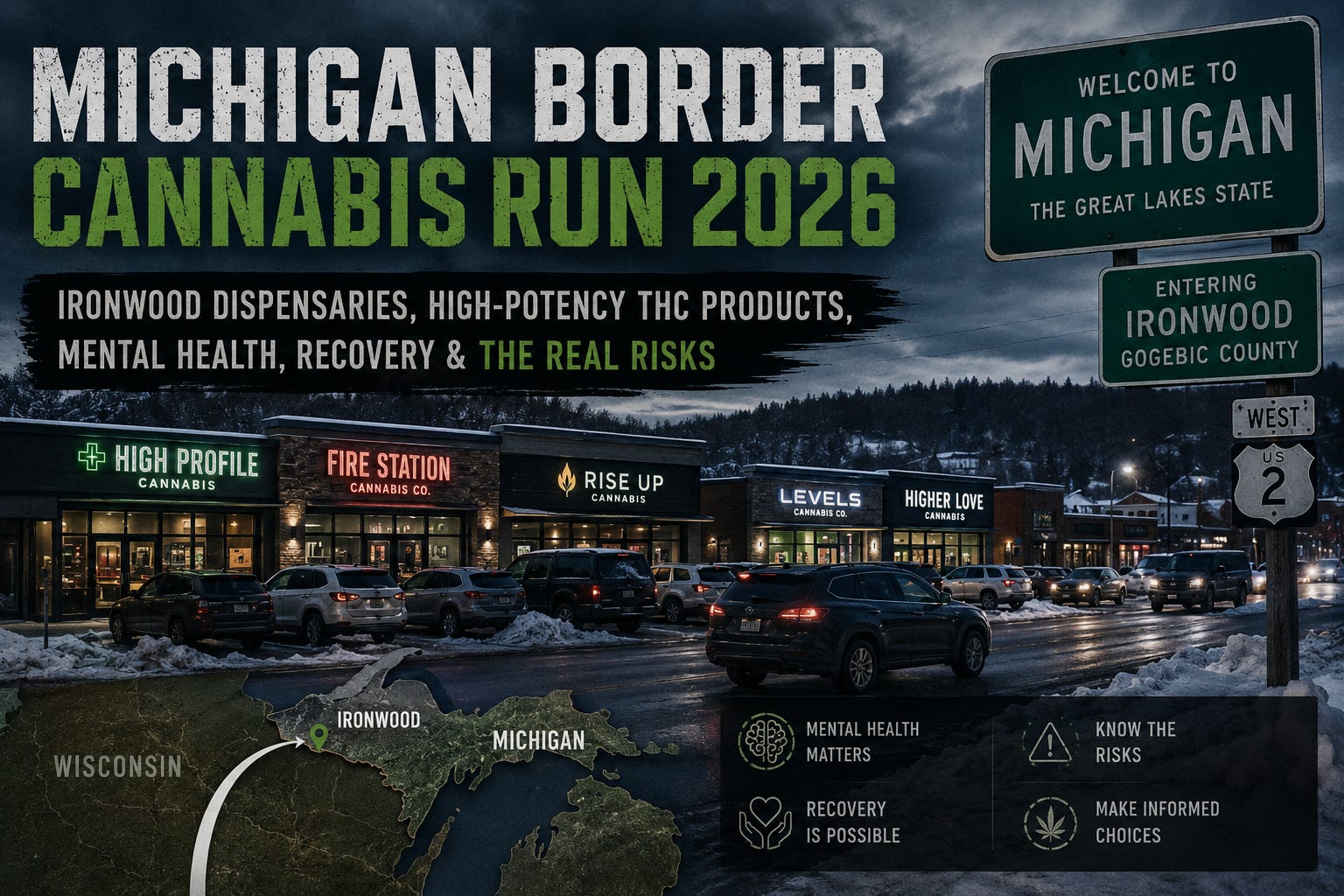
Hey Northwoods neighbors in Arbor Vitae, Vilas County, Rhinelander, and beyond — it’s Belle here. My original 4/20 post hit nearly 1,000 local views, and the response made one thing clear: people want honest, deep conversation about cannabis, the Michigan run, modern THC products, mental health, addiction/recovery, and what this actually means for everyday families and individuals in recovery.
As someone whose drug of choice was pot for years (one of them anyway), and now a counselor walking alongside people in recovery, I’m not here to pick sides or define your path. This is about laying out the data, lived realities, product details, and evidence-based insights on both the potential benefits and serious risks — especially around mental health and addiction.
Ironwood, Michigan: Five Dispensaries & The Local Impact
Just an hour or so across the border, Ironwood has five licensed recreational dispensaries (including The Fire Station Cannabis Co., High Profile, Rize with drive-thru, Higher Love, and more).
2025-2026 Numbers:
Ironwood/Gogebic County sees roughly $270,000+ in annual local cannabis tax distributions (about $54k per dispensary). This has funded sidewalks, walking paths, infrastructure, and local services. Michigan’s broader adult-use market remains in the billions, though the new 24% wholesale tax (effective 2026) and oversupply have affected pricing. Wisconsin drivers contribute significantly — meaning our state loses millions in potential revenue.
Positives: Regulated, lab-tested products reduce risks like fentanyl-laced street weed. Jobs and tax dollars for UP towns.
Challenges: Increased traffic, changing community feel, business competition, and reports of heightened enforcement by Wisconsin authorities on return trips.
Today’s Cannabis Products – Not Your ’90s Weed (What’s Actually on Shelves)
Dispensary options are lab-tested for potency, terpenes, pesticides, and contaminants. Here’s the practical breakdown Northwoods folks are buying:
Flower/Bud: Average 15–20%+ THC (vs. ~4% in the 1990s). Indica (body-focused), Sativa (mind-focused), hybrids.
Vapes & Cartridges: Often 50–95% THC. Discreet and fast-acting.
Edibles (gummies, chocolates, beverages): Low-dose 2.5–10 mg options common; some hit 100 mg+. Effects delayed but long-lasting.
Concentrates/Dabs (live resin, rosin, shatter): 50–90%+ THC. Extremely potent.
Tinctures, Topicals, Capsules: Better for precise or non-intoxicating use.
Delta-8/THCA hemp products at local gas stations face tightening 2026 federal rules.
The Balance: Many report functional use for pain, sleep, or anxiety at lower doses. But higher potency drives faster tolerance, stronger effects, and higher overconsumption risks (especially with edibles).
Mental Health, Addiction & Recovery: The Evidence-Based Picture (2026)
This is where the conversation gets most important — and most nuanced.
Cannabis Use Disorder (CUD) & Addiction Risks:
Recent data shows ~30% of past-year cannabis users meet criteria for Cannabis Use Disorder. Risk is higher with frequent use and high-potency products. CUD involves cravings, tolerance, withdrawal (irritability, insomnia, anxiety), and continued use despite problems. For people with prior addiction histories, this can become its own challenge.
Mental Health Links:
Large 2026 reviews (including a major Lancet analysis of dozens of trials) found little to no strong evidence that cannabis effectively treats anxiety, depression, or PTSD — common reasons people cite for use. It may even worsen outcomes in some cases by delaying proven therapies or increasing risks like psychotic symptoms (especially with daily high-potency use in vulnerable individuals). Adolescent/young adult use shows associations with higher risks of psychotic, bipolar, depressive, and anxiety disorders later.
Recovery Communities & Harm Reduction:
Traditional 12-step (AA/NA) programs emphasize total abstinence from mind-altering substances. “California sober” (abstinent from harder drugs but using cannabis) often faces judgment in meetings. Marijuana Anonymous exists for those whose primary issue is cannabis.
On the other side: Some observational studies and reports suggest cannabis can help manage opioid withdrawal symptoms (anxiety, insomnia, pain) for certain people, potentially supporting reduced opioid use in supervised or specific contexts. However, evidence is mixed, often low-to-moderate quality, and not a substitute for comprehensive treatment. For many in long-term recovery (including my own journey), addressing cannabis use was a key later step.
Provocative Truth: In recovery spaces, this creates real tension. Some find functional low-dose use helpful as a bridge or alternative; others experience it as trading one dependence for another, especially with today’s potent products. Personal history, genetics, age of use, and frequency matter hugely.
Big Questions for Northwoods Readers (Share Below)
Has the Ironwood run made things safer (tested product) or normalized high-potency daily use in our communities?
What products have you or loved ones tried — and what was the real mental health or recovery outcome?
In recovery: Has cannabis helped stay off harder substances, complicated sobriety, or been neutral?
Parents, counselors, elders: What changes are you seeing in motivation, youth mental health, or family dynamics?
AA/NA folks: Comfortable sharing “California sober” experiences in meetings? Views on supervised medical cannabis in detox?
Wisconsin: Legalize to keep tax dollars here and regulate, or maintain strict laws?
I’m not telling you what “sober” means for you or whether to make the drive. Pot was central in my using story — recovery taught me radical honesty about all substances, including mental health impacts.
Drop your respectful, real experiences in the comments. This affects families, recovery meetings, and our rural communities deeply. Your stories matter.
Helpful Resources:
Marijuana Anonymous meetings
Local counselors & treatment providers
SAMHSA Helpline: 1-800-662-HELP
Mental health support through your doctor or crisis lines
Stay safe out there, Northwoods. Whether you’re fully abstinent, exploring harm reduction, in active recovery, or somewhere in between — facing the full picture (good, bad, ugly, and hopeful) is how we move toward living better.
With love from the Northwoods,
Belle
P.S. If this resonates, share it with someone who makes the border run, is in recovery, or navigating mental health challenges. The more honest voices, the stronger the conversation. Tag a friend.
Imma be honest it has normalized higher dosage (for me anyways). I used basically everything they could sell besides the clones. The mental health aspect and recovery in my head depends on the person. It’s a challenge but it’s not world ending and i don't completely need it. Its more of who has more idk the word but for sure prone to addiction like gambling and drinking alcohol. Like i do believe it is a gateway drug. If not made fully aware of what it can and can’t do. People will tend to use till their tolerance is too high and want to “try”. something new so they think since i smoked/dabbed/ate marijuana. which is still illegal in many ways. why not try other substances like psychedelics. which will eventually turn into higher tier drugs and maybe lead to death. 3rd question ls the same depends on the person and what they are going through mentally. I feel like if you just got sober from like i said high tier drugs its a harder challenge and you should stay sober. Or at least a 10 year wait should be done. My grandma was against it at first but eventually warmed up to it. I mean would you rather your loved ones deal with depression and/or use drugs that might contain fent now. Atleast its tested for substance compared to a street dealer who has or may not have gotten the same stuff from the farmer. Idk about the 5th question tbh and what you mean by cannabis detox like not doing it at all 😂. 6th question we have 3 different states to buy marijuana from. Since we are considered the most alcoholic state why not become better than cali in marijuana 2 🤷🏽😂.. otherwise our state is bleeding development to other states over congress men wanting to keep their stocks high in alcohol since they didn’t see the marijuana uprising in the midwest.
I live in CT where we also have legal weed via Dispensaries. As a Recovery Coach, the use issue is mixed: Some people I talk to found that quitting all substances, including Cannabis, was a key thing for their recovery. I also know people who have handled their PTSD and weaned off of pharmaceutiucals by use of Sativa strains. I tend to like to have honest conversations that talk about the risks.