
Knowing Better, Still Freaking Out? That's Your Amygdala Talking

Knowing Better, Still Freaking Out? That’s Your Amygdala Talking
Picture this: You’re driving home after a long day. Radio low. Sun dipping. Everything feels okay.
Then — bam — a car horn blares behind you.
Instantly your heart slams into overdrive, breath catches, tunnel vision kicks in, and for 3–4 seconds you’re right back in that fight from ten years ago. You know you’re safe. You know it’s just traffic. But your body doesn’t care what your mind knows.
That’s not weakness. That’s wiring.
Your brain’s ancient survival system is doing exactly what it was built to do — keep you alive — except now it’s running old software in a modern world. Understanding what’s happening under the hood is the first real step toward turning down the volume on those automatic alarms.
Let’s walk through the Trigger Matrix — how threats get wired into instant reactions, why “knowing better” often loses the fight, and — most importantly — gentle, realistic ways to start updating the system. No shame. Just science, real stories, and doable steps.
Progress is progress — whether it’s a mile or a millimeter.
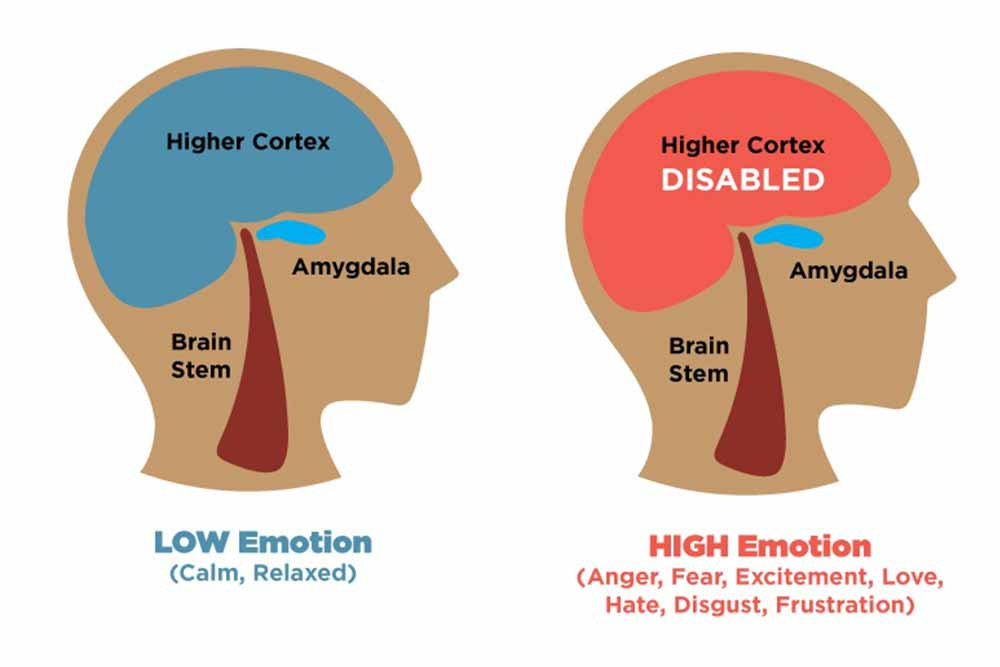
Here’s a quick map of the key players in your brain’s emergency crew:
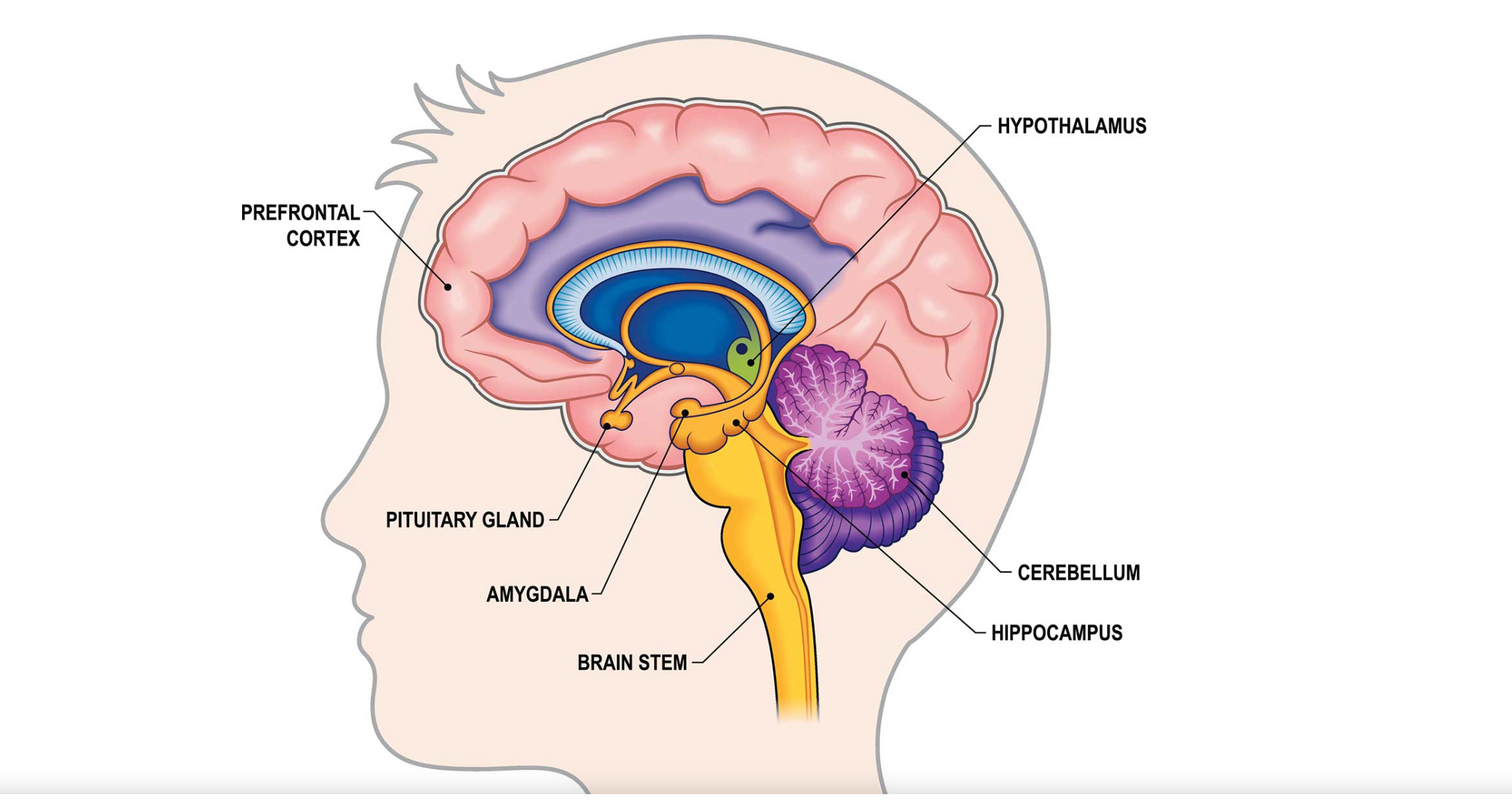
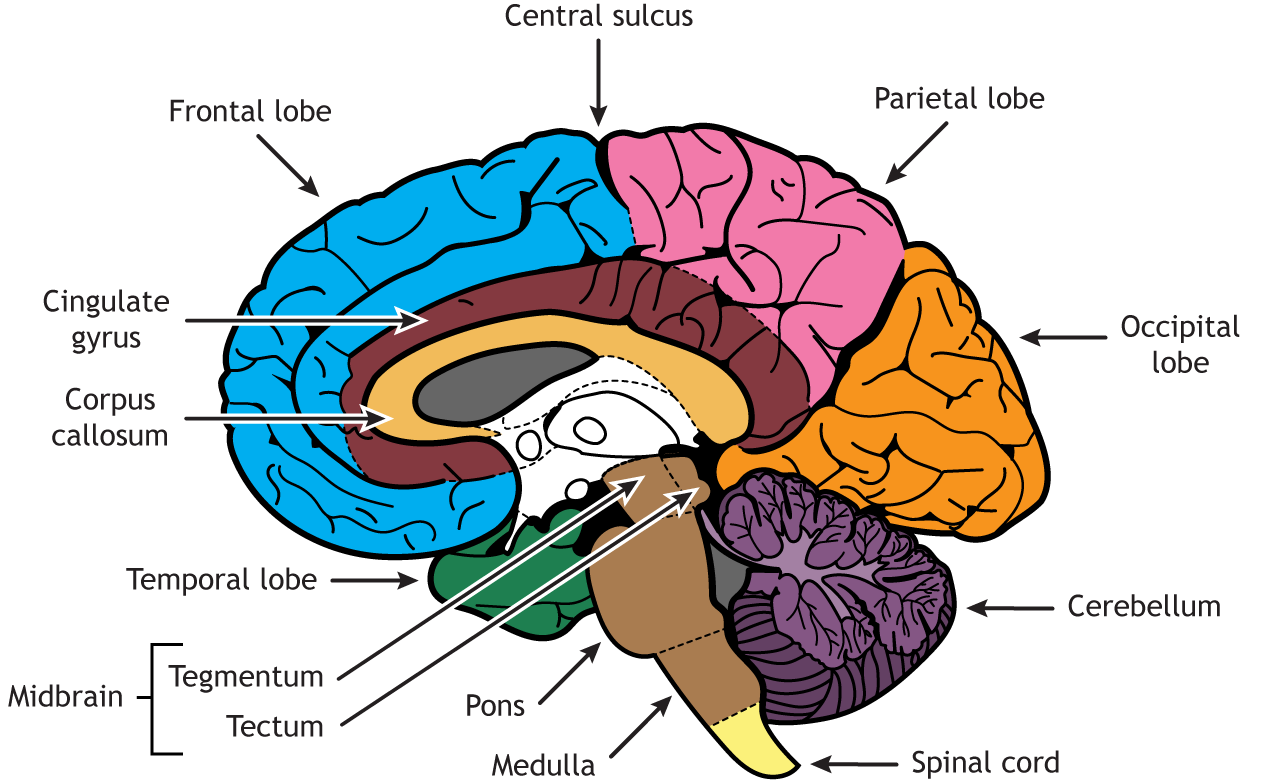
(That little almond-shaped alarm? → Amygdala. Memory tagger? → Hippocampus. Logic CEO trying to keep things calm? → Prefrontal cortex.)
The Brain’s Survival Circuitry — Your Inner Alarm System
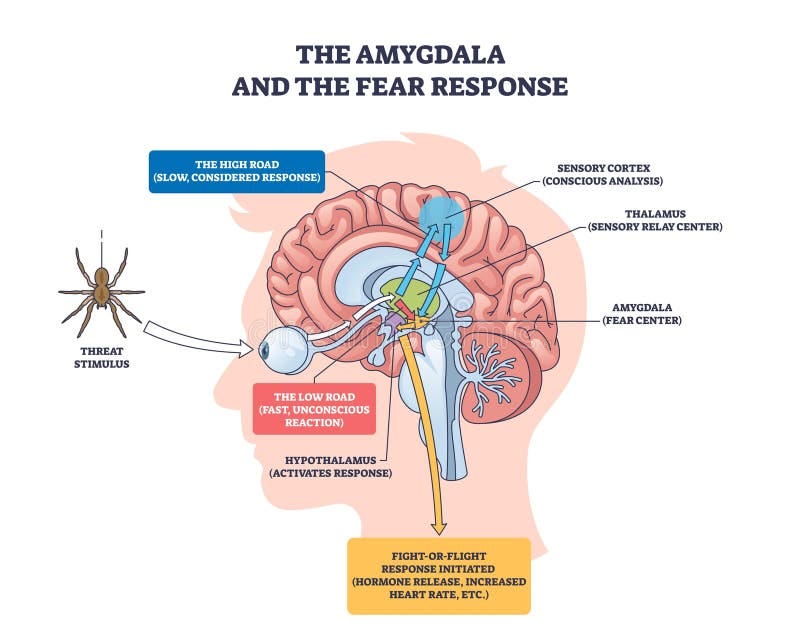
The amygdala is basically your smoke detector — always scanning, always on high alert. One whiff of potential danger (a tone of voice, a smell, headlights in the rearview) and it screams “GO!” Evolution favored the paranoid: better to freak out over burnt toast than miss the tiger in the bushes.
Problem is — modern life is full of false alarms.
The hippocampus acts like a glitchy GPS, tagging sensory details (rain on the windshield, certain cologne, raised voices) to old threats. Recent Yale brain imaging (late 2025) shows trauma can shrink hippocampal volume, making those memory links stickier and more automatic. Rain hits the roof → body freezes like you’re twelve again hiding from the storm. Mind says “just weather.” Body screams “run.”
Then there’s the prefrontal cortex — your rational adult in the boardroom trying to say “chill, we’re okay.” But when the amygdala fires, cortisol and adrenaline flood the system and basically put the CEO in a temporary coma. That same Yale study highlighted how sustained cortisol doesn’t just spike stress — it literally strengthens emotion-memory circuits, making old threats feel present-tense again.
That’s why logic (”I know better”) usually loses to body panic (”I feel in danger”).
The good news? Neuroplasticity.
Your brain changes. Trauma rewires fast; healing rewires slower — like building muscle with consistent, small reps.
The Trigger Matrix in Action — When Survival Meets Real Life
Call it the Trigger Matrix: that invisible web of fight-flight-freeze signals that once saved you and now sometimes trips you.
Freeze — standing frozen in the grocery line because someone raised their voice behind you
Fight — snapping at your partner over nothing because tone matched an old argument
Flight — sudden urge to bolt from therapy when the topic gets too close
Mark (from residential group years ago) would lock up the second anyone raised a hand near his face. Not a choice. Amygdala flashed dad’s belt. Mind knew “group therapy, safe room.” Body said nope. Emotional memory overrode facts every time.
Those same cortisol-driven memory links can fuel the dopamine chase in addiction, the hypervigilance in PTSD, or the shame spiral that follows: “Why can’t I just stop reacting like this?”
It’s neurology, not moral failure. You’re not broken. Your system is just running outdated protection code.
Ripple Effects — How Triggers Shape Daily Life
One sharp reaction at home → guilt wave → isolation → “maybe I’m too much” → pulling away from support → work focus tanks → shame compounds.
The people around you feel it too: partners walk on eggshells, kids sense the tension, friends get “distant” vibes. Everyone wants the “real you” back, but the alarm keeps going off.
Here’s the shift: when you start seeing it as wiring instead of weakness, empathy shows up — first for yourself, then for others. Less self-hate. More “that was the alarm again. Not who I am.”
Rewiring the Trigger Matrix — Practical Paths That Actually Work
Recent Harvard imaging (early 2026) showed consistent meditators growing thicker prefrontal cortex tissue in attention-regulation zones — literally beefing up the CEO while calming the amygdala over time.
A few grounded ways to start:
Name it to tame it Trigger hits → say out loud (or in your head): “Amygdala alarm. Old wiring.” Naming reduces intensity within seconds (classic prefrontal boost).
Ground fast Feet on floor. Feel the chair. Name 5 things you see, 4 you can touch, 3 you hear. Slow exhale count: 1…2…3…4…5. Tiny rep. Builds new neural pathways.
Body-first approaches (Somatic Experiencing style) Notice the sensation (tight chest, racing pulse) without trying to fix it. Breathe into it. Let it move. Recent scans show this helps “complete” stuck survival responses and re-balance amygdala-prefrontal communication.
Mindfulness + small exposure Short daily body scans quiet the noise. Gradually face small trigger cues while staying regulated — rewrites the memory tag from “danger” to “manageable.”

No perfection required. Healing is messy and non-linear. Some days you win. Some days you crawl. Every intentional breath is still rewiring.
Owning Your Trigger Matrix & Moving Forward
Triggers aren’t proof you’re failing — they’re old survival stories trying to keep you safe. Your job now? Gently update the software.
Drop one trigger you’re noticing lately in the comments — I read every single one. Or if this landed, consider subscribing — next post I’m sharing a free downloadable “Trigger Tracker” (patterns, wins, compassion notes) exclusively for paid subscribers.
You’re not behind. You’re not broken.
You’re updating. One breath, one name, one tiny step at a time.
You’ve got this.
Progress is progress.
Belle
What old alarm went off for you recently? Share below — no judgment, just real talk. 💛
Belinda “Belle” Morey, BS, CSAC
Clinical Substance Abuse Counselor & Recovery Coach
Progress is Progress LLC
📍 Serving the Northwoods & virtual everywhere
📞 Call or text: 715-892-5310
📧 progressisprogressmilormil@gmail.com
🗓 Free intro sessions: www.progressisprogressllc.com
📬 Substack: progressisprogress.substack.com
🌟 Skool recovery space: https://www.skool.com/progress-is-progress-coaching-3648/about