

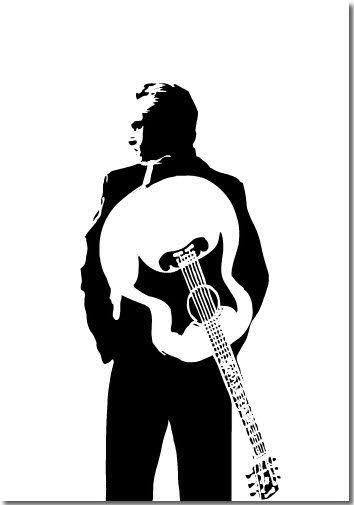
Hurt: From Nine Inch Nails to Johnny Cash—Why the Rawest Song in Recovery Still Matters
I’ve lost track of how many times I’ve played Johnny Cash’s “Hurt” for a group, watched faces crack open as the song builds, and kept a box of Kleenex within arm’s reach. There’s something about this track—especially Cash’s version—that turns a room silent, makes the air heavy. Even if you’re not the one carrying the weight of addiction or regret, you feel it on your skin.
But you can’t really understand why it lands so hard until you know where it came from, where it went, and what was left behind.
The Origin: Nine Inch Nails and the Anatomy of Pain
“Hurt” started with Trent Reznor, the mind behind Nine Inch Nails, in 1994. It’s the final track on “The Downward Spiral”—an album that’s basically a descent into the darkest corners of self-destruction. The original “Hurt” is bleak, even for NIN. There are no metaphors to hide behind. It’s self-harm, suicidal ideation, drug dependency, and the numbness that comes when the pain is too much to process (Far Out Magazine). Reznor wrote it while he was deep in his own struggle—with addiction, depression, and the sense that maybe nothing could ever really heal.
The line that always cuts: “Everyone I know goes away in the end.” That’s not poetry—it’s just what it feels like when you’re sure you’re broken beyond repair.
How It Was Written: Reznor’s Spiral
Reznor has said that “Hurt” was less a song than a confession. He wrote it at a time when he was “falling apart,” using music as a last lifeline. The process was brutal—he’s talked about how his pain became the cornerstone for the track, how each line was pulled from somewhere he didn’t want to visit. When the song came out, it wasn’t a radio hit, but it was a cult anthem—a song for anyone who felt invisible, irredeemable, or just plain done (Medium; Adam Steiner UK).
Johnny Cash: The Man in Black and His Demons
Johnny Cash was no stranger to pain. By the time he covered “Hurt” in 2002, he was in his 70s, his body failing, his wife June Carter Cash standing by him through decades of addiction, arrests, and comebacks. Cash had spent his life wrestling with drugs and alcohol, cycling through hell and clawing his way out again and again (Art of Manliness; FHE Rehab).
Rick Rubin, Cash’s producer and the architect of his late-career resurrection, brought “Hurt” to him. At first, Cash didn’t want to do it—the original was too aggressive, too rock, too far from his country roots. But Rubin insisted, and Cash eventually saw something in the song: a way to tell the truth about regret, loss, and the way pain never really leaves you (Side-Line).
When Cash Sang “Hurt,” It Wasn’t a Cover—It Was a Surrender
What happened next is the stuff of legend. Cash took Reznor’s song and didn’t just sing it—he lived it, bled it. The music video, directed by Mark Romanek, is almost unbearable: footage of a frail Cash, intercut with scenes from his youth, his career, his losses. June watching him from the stairwell, knowing the end was near. Cash’s voice isn’t strong, but that’s the point. Every crack is a memory, every quiver an apology.
Trent Reznor’s reaction? At first, he thought the idea “sounded a bit gimmicky.” When he saw the video, he changed his mind. “That song in particular was straight from my soul, and it felt very strange hearing the highly identifiable voice of Johnny Cash singing it,” Reznor said. After watching the video, he admitted: “It wasn’t my song anymore” (Wikipedia; American Songwriter).
Cash’s “Hurt” wasn’t a cover. It was a transmission. A goodbye. An act of public grieving.
The Science of Why Music Wrecks and Repairs Us
Music isn’t just background noise. It’s ancient, primal—older than language, older than writing. Archaeologists have found bone flutes and drums dating back at least 40,000 years, maybe even longer. Before we could speak, we sang, we wailed, we kept rhythm to survive, to mourn, to heal.
What Happens in the Brain
When you hear music, especially something emotionally loaded, your brain lights up. The auditory cortex processes the sound. The limbic system—the part of your brain that deals with emotion, memory, and motivation—gets involved. Dopamine (the “reward” chemical) spikes, even if the music is sad. That’s why you crave certain songs when you’re hurting: your brain is literally using music to regulate mood, process pain, and sometimes, find hope.
Music and Memory: The hippocampus (where memories live) is deeply involved. That’s why a song can unlock memories you thought were buried.
Mirror Neurons: When you hear someone’s voice break, your brain fires up as if you’re experiencing that pain yourself. This is why Cash’s quivering delivery doesn’t just sound sad, it feels sad—your brain is wired for empathy.
Therapeutic Use: Music therapy is a legit clinical tool. There’s research showing it can lower anxiety, help process trauma, and even reduce physical pain. For people with addiction, music can help unlock emotional honesty and build connections that words alone can’t (American Psychological Association); (National Institutes of Health).
Why Sad Songs Heal
It seems backwards, but sad music can actually make us feel less alone. When you hear someone else sing the thing you’re afraid to say, it gives you permission. It’s called “emotional resonance.” Your pain feels seen. Your grief feels shared. That’s why “Hurt”—especially in Cash’s hands—isn’t just devastating, it’s oddly comforting. It makes room for the mess.
The Psychology of Music: Why “Hurt” Works (and Hurts) in Therapy
Let’s rip the band-aid off: music is primal. The urge to pound a drum, to wail into the dark, to let melody say what words can’t—that’s older than civilization. Anthropologists say music has been with humanity for at least 40,000 years, probably longer. We’ve always used it to mourn, to celebrate, to connect, to survive.
There’s science behind the magic. Music hits the limbic system—our emotional control center. It bypasses logic and reason, cuts right to the places we hide things. For people in recovery, for those who love them, for therapists, music is a shortcut to the rawest parts of ourselves (Psychology Today).
Why “Hurt” Specifically?
It Names the Unnamable: Most of us are taught to stuff pain down, to keep secrets, to not talk about the ugly parts. “Hurt” names the shame, the regret, the bone-deep loneliness. When you hear Cash—or Reznor—say it out loud, it makes room for your own truth.
It’s Universal and Personal at Once: You don’t have to be an addict to feel like you’ve lost everything. You don’t have to have lived through Cash’s hell to know what it’s like to look back on your life and wonder if it mattered. “Hurt” holds space for both the addict and the codependent, the parent and the child, the therapist and the client.
It Models Vulnerability: In therapy, we talk about “holding space.” Cash’s “Hurt” is what holding space sounds like. He doesn’t flinch away from the dark. He lets it all show, and in doing so, gives permission to everyone listening to do the same.
It’s a Mirror and a Bridge: Sometimes a client can’t find words, or won’t. Play this song, and suddenly the room fills with things nobody could say before. It’s a way in, a way out, a bridge between people who thought they were alone in their suffering.
Using “Hurt” in Therapy: The Group, The Kleenex, The Aftermath
I’ve run the group dozens of times—maybe hundreds. “Hurt” goes on, and you watch people shift. Some stare at the floor, some cry openly, some get angry. What’s wild is that the song doesn’t just dredge up sadness; it hits on every part of the trauma spectrum: anger, shame, guilt, longing, even hope.
Here’s what I’ve learned:
Music Triggers Memory: Songs like “Hurt” can unlock memories and feelings people thought were gone for good. Sometimes that’s painful, sometimes it’s healing—but it’s always real.
Music Builds Connection: In a group, you see people realizing they’re not the only ones who feel wrecked. That alone can break the grip of shame.
Music Teaches Empathy: If you’re a therapist, a parent, a friend—seeing someone react to this song, even if their story is different from yours, reminds you that pain is universal. So is the need for compassion.
The Psychological Anatomy of “Hurt” (Johnny Cash Version)
Now, let’s rip this song apart the way we would in group. Line by line, moment by moment, not just what’s sung but how it’s delivered. Because with Cash, every crack in his voice is a message on its own.
Opening: The Wreckage
“I hurt myself today, to see if I still feel.”
This isn’t just about physical pain. It’s the numbness talking. For people in addiction or deep depression, pain is proof you’re not dead inside yet. It’s a test: am I still here? Cash’s delivery is quiet, almost confessional. You feel like you’re eavesdropping on someone’s last prayer.
“I focus on the pain, the only thing that’s real.”
Everything else is fog. In recovery work, this is the moment clients recognize—the pain becomes a strange comfort, more real than joy or hope.
The Descent
“The needle tears a hole, the old familiar sting.”
Cash doesn’t rush this. He’s lived this line. Whether it’s heroin or heartbreak, it’s about the rituals we use to escape (or return to) ourselves. The pacing is slow, resigned—not glamorizing, just telling the truth.
“Try to kill it all away, but I remember everything.”
Addiction is often about trying to forget. But the memories don’t go. In therapy, this is where the room gets quiet. Everyone has something they’re trying to kill off; most of us fail.
The Chorus: The Weight of Regret
“What have I become, my sweetest friend? Everyone I know goes away in the end.”
This is where Cash’s age, his history, all come into play. It’s not just a lament—it’s an admission. He’s outlived so many, lost so much. For those in recovery, regret is a constant companion. For those who love them, it’s the line they wish they could change.
“And you could have it all, my empire of dirt.”
Cash never had an empire, not really. But whatever he built, fame, fortune, even legacy—it’s nothing now. This line is about humility, about facing everything you’ve built and realizing it doesn’t matter if you’re alone.
“I will let you down, I will make you hurt.”
This is the apology so many wish they could get, or wish they could give. It’s an honest admission of brokenness, the kind that can break cycles in families, in therapy, in recovery. Cash doesn’t ask for forgiveness—he just lays it all out.
The Bridge: The Mirror
“I wear this crown of thorns upon my liar’s chair, full of broken thoughts I cannot repair.”
The biblical imagery isn’t accidental. Cash, steeped in gospel, frames his suffering as both self-inflicted and redemptive. The “liar’s chair” is every time he pretended to be okay, every time he let someone down. “Broken thoughts I cannot repair”—that’s mental illness, addiction, trauma, all laid bare.
“Beneath the stains of time, the feelings disappear. You are someone else, I am still right here.”
Aging, addiction, grief—they change us. The people we love become strangers. We become strangers to ourselves. Yet, inside, something endures, something desperate to stay visible.
The Final Chorus: The Last Word
As Cash repeats the chorus, his voice is almost gone. You hear the end coming—not just of the song, but of a life. The video was filmed not long before he died. He’s not just singing about loss; he’s embodying it.
The last lines hang in the air, unresolved:
“If I could start again, a million miles away, I would keep myself, I would find a way.”
There’s no redemption, no false hope. Just a wish, a regret, an understanding that some things can’t be fixed—but maybe, with honesty, they can be faced.
Intention, Performance, and Why It Matters for Therapy
With Johnny Cash’s “Hurt,” intention is everything. He didn’t sing this to entertain. He sang it to confess, to leave something behind, to show the world what unfiltered regret and honesty sound like.
Pacing: Slow, deliberate. Cash isn’t rushing to get away from the pain. He sits with it. This models for listeners—clients, clinicians, families—the importance of not rushing healing or brushing past hard truths.
Vocal Cracks: Every tremor, every break in his voice, is a sign of real emotion. In group, we talk about how vulnerability sounds. Cash’s voice is the sound of a man who has nothing left to hide.
Stripped-Down Arrangement: No musical tricks, no grand production. Just piano, guitar, and the weight of lived experience. This simplicity strips away defenses—for both the singer and the listener.
Why This Song Still Matters: For Every Generation
Maybe you’ve never heard of Johnny Cash. Maybe you think Nine Inch Nails is just angry dad music. It doesn’t matter. Hurt is for anyone who’s ever wished they could hit rewind, or who’s ever felt like they’re falling apart and nobody sees it.
For younger generations, the honesty in this performance is a blueprint—proof that telling the truth, even when it’s ugly, is better than living with lies. For those who’ve been in the trenches longer, it’s a mirror and a warning. And for everyone who’s ever loved an addict, or been one, it’s a kind of secular prayer.
How We Use It, How We Heal
We use “Hurt” in therapy not because it fixes people, but because it opens them. It makes honesty contagious. It teaches us that music isn’t just art—it’s medicine, it’s memory, it’s a map for surviving ourselves.
So next time you play it—whether in a group, a car, or just to feel something—remember: you’re not alone in the mess. Johnny Cash carried it too. So did Trent Reznor. So does everyone who hears this song and feels less invisible, even if just for those four minutes.
The Legacy: A Song That Belongs to Everyone Who’s Suffered
Johnny Cash’s “Hurt” won awards, but that’s not why it matters. It matters because it did what few songs ever do: it took someone else’s pain and made it universal. It gave people permission to grieve, to rage, to regret, and to forgive themselves—if only for a moment.
Reznor wrote a song that saved his life. Cash sang it like a confession, and in doing so, gave the rest of us a little more room to breathe.
If you’ve ever played this for a group, if you’ve ever watched someone’s face change in the middle of the song, you know. This isn’t just music. It’s a reckoning.
If you’re still reading, you’re part of the club now—the one that knows music can break you open, but it can also stitch you back together. So play “Hurt.” Play it for your clients, for your family, for yourself. Cry if you need to. Rage if you need to. But don’t ever think you’re alone in the dark. We’re all in the room together, music on repeat, surviving the only way we know how: one line, one howl, one day at a time.
“Music isn’t just art—it’s medicine.”
Yeah, and you didn’t prescribe it, you sat with it. This feels like group therapy without the clipboard... just truth, cracked voices, and staying in the room when it hurts. Heavy, kind, and quietly brave.