

I’m a substance use counselor in Wisconsin—one of the most conservative states in the country. We don’t have legal recreational marijuana, and medical cannabis is incredibly hard for patients to access. I’ve heard clients describe depression, trauma, anxiety, and addiction as weights around their ankles or thick chains that no amount of CBT or daily medication can loosen.
Yesterday, the FDA officially granted three national priority review vouchers to companies developing psychedelic-assisted therapies. Compass Pathways received a voucher for COMP360, a synthetic form of psilocybin being developed to treat treatment-resistant depression (TRD). Usona Institute, based in Madison, Wisconsin, was awarded one for psilocybin-assisted treatment of major depressive disorder (MDD). Transcend Therapeutics (now owned by Otsuka) got the third for methylone-assisted treatment of PTSD.
These vouchers could cut the final round of FDA review for a new drug application from the usual 6–10 (or even 10–12) months down to as little as 1–2 months. This pilot program—recently expanded by executive order—could mean that, according to FDA Commissioner Marty Makary, the first psychedelic drug is approved as soon as this summer.
Let’s be clear: this is not an approval. It’s a jump-start on FDA review for medicines already designated as Breakthrough Therapies—meaning there’s preliminary evidence that they might provide significantly better treatment for serious or life-threatening conditions that don’t respond well to standard therapies. As a substance use counselor working with providers exploring newer options like psychedelic-assisted therapy, I want to tread carefully without taking sides. So here are the facts: what the fast-track process looks like, what the latest science says, the potential benefits, the real risks, and what all of this could mean for providers and counselors—especially those working with veterans and clients who struggle with mental health disorders like PTSD.
What “Fast-Track” Actually Means for Psilocybin and Methylone Therapies
The FDA isn’t approving psychedelics for general use. They’re offering expedited review vouchers as part of the Commissioner’s National Priority program, building on earlier Breakthrough Therapy designations. Companies still have to submit late-stage Phase 3 data proving these compounds are safe and effective.
Psilocybin-assisted therapy and methylone are not self-administered antidepressants you take at home every morning. For both, typical care looks like this:
Screening and preparation meetings
One or more dosing sessions (usually lasting 4–8 hours) with a trained facilitator in a clinical setting
Integration meetings afterward to process the experience and translate insights to daily life
Set and setting matter—in both literal and therapeutic senses. It’s not just about the medicine: it’s about the team, the environment, and the follow-up plan. Think brain surgery: the tool is important, but so is everyone else preparing you, performing the procedure, and monitoring your recovery.
That said, psychedelics aren’t going to magically appear on your provider’s prescription pad in Wisconsin tomorrow (or even if/when the FDA approves them). Schedule I substances like psilocybin remain illegal federally. Even with FDA approval, states would have to allow providers to become certified, train clinicians, integrate these therapies with insurance, decide where therapy can be administered, and address public health concerns. Early on, that might look more like ketamine clinics than your neighborhood pharmacy—especially in conservative states.
The Science: What We Know About Psilocybin and Methylone from Recent Trials
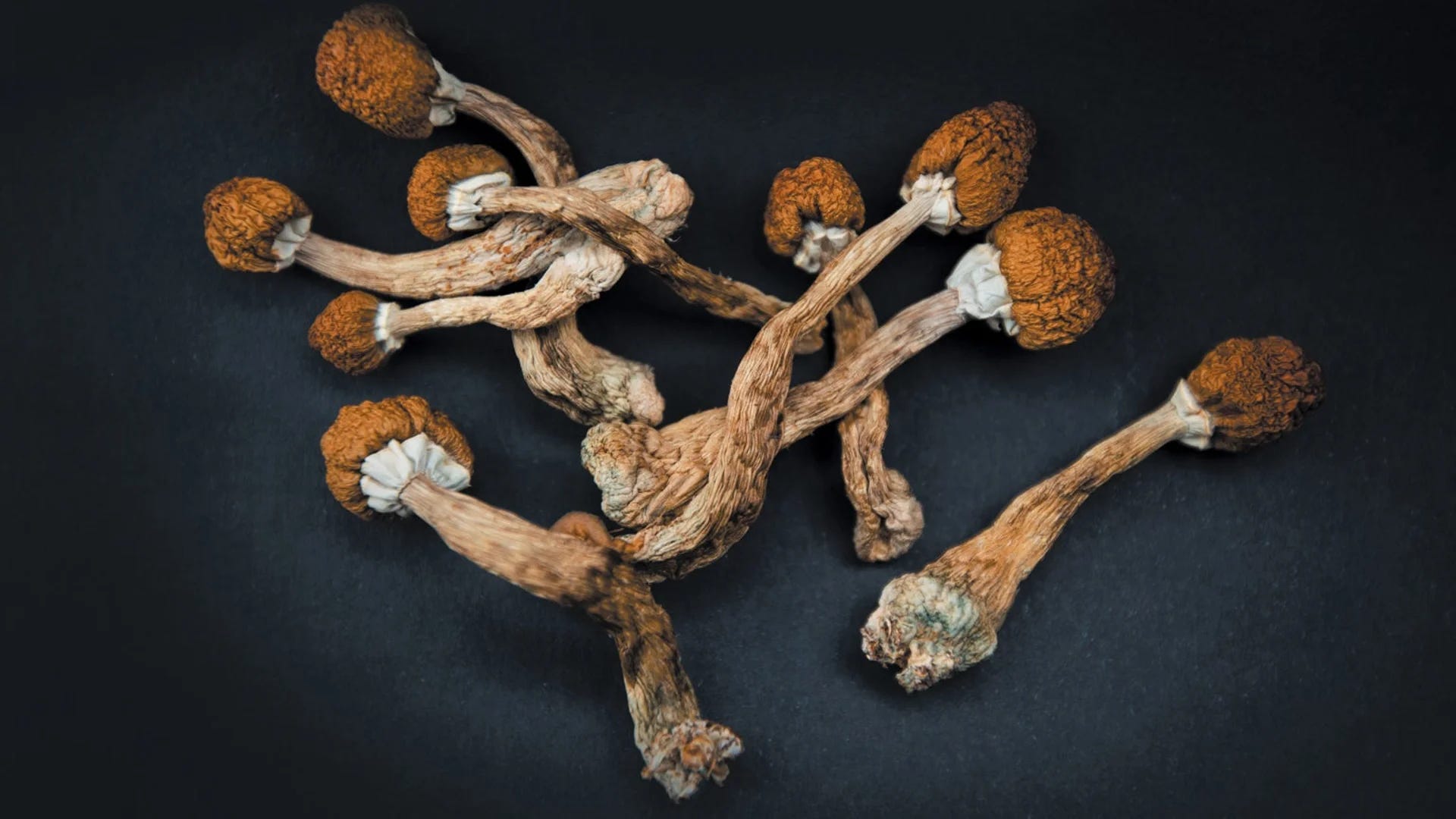
Psilocybin works on serotonin 2A receptors. Many patients and researchers describe the experience as loosening fixed patterns of thought, expanding the emotional range, and making new neural connections possible—sort of like shuffling the furniture in your brain so it doesn’t snap back to its original position.
COMP360 from Compass showed promise in two Phase 3 trials for people with TRD. In the COMP005 trial, a single dose of psilocybin (25 mg) was compared to placebo, resulting in a statistically significant difference in MADRS depression scores (a -3.6 point difference vs. placebo at week 6). Another trial tested two doses (25 mg each, three weeks apart) against a low-dose active comparator, showing a -3.8 point difference. Some patients responded within days, and benefits lasted up to six months for responders.
Usona is studying psilocybin for major depressive disorder, building on earlier trials that found lasting improvements in symptoms and daily functioning after just one dose.
In veterans with TRD and PTSD, an open-label pilot study released in 2025 tested single-dose psilocybin (25 mg) against waiting-list controls in U.S. military veterans with severe TRD. Response rates were 60%, and remission was 53% at three weeks—47% of patients maintained response, and 40% maintained remission at 12 weeks. PTSD didn’t seem to blunt the antidepressant effects. Longer-term, 12-month follow-up showed sustained improvement, with some drop-off from the immediate post-dosing high.
Several clinical trials are investigating psilocybin for veterans with PTSD, with and without comorbid alcohol use disorder. These include large Phase 3 trials across multiple sites, as well as studies combining the medicine with psychotherapy supports.
MDMA and analogues like methylone are a bit different since they target both serotonin and dopamine receptors. Methylone’s mechanism is well-defined, but it doesn’t strongly bind to 5-HT2A receptors, so it may cause less of the traditional “psychedelic” experience compared to MDMA.
TSND-201 (developed by Transcend Therapeutics, now owned by Otsuka) is being studied for PTSD. Results from a Phase 2 trial published in JAMA Psychiatry in 2026 showed that participants who received oral doses once a week for four weeks experienced rapid and sustained reductions in CAPS-5 scores compared to placebo (a least-squares mean difference of -9.64 points at day 64, p=0.011). Improvements were seen as early as day 10 and lasted through follow-up. Response (defined as a ≥50% improvement from baseline) occurred in 57.1% of methylone patients versus 19.2% of placebo patients. Remission and loss of PTSD diagnosis also favored methylone.
Common side effects included headache, nausea, high blood pressure, increased heart rate, anxiety during treatment, fatigue, and insomnia. Serious adverse events were rare when provided in supportive settings, but some trials noted temporary increases in suicidal ideation on dosing days for depression. No deaths or persistent psychosis have been reported in modern controlled trials, but long-term safety still needs monitoring as these therapies become more widely used.
What Psychedelic-Assisted Therapy Could Offer
If clinical trials keep showing strong results, psychedelic-assisted therapy could become another tool for patients who have run out of options—where medications, therapy alone, or other interventions haven’t worked or stopped working.
Rapid onset and potential durability: People can experience shifts in outlook after just one or two therapy sessions with a psychedelic, compared to antidepressants that take weeks to work and must be taken daily.
PTSD and veterans: Military veterans face higher rates of PTSD, depression, and suicide than the general population. This approach could help veterans process trauma by lowering fear responses and helping them open up emotionally—something traditional trauma-informed care and exposure therapy can take much longer to achieve. Promising early results for psilocybin in veterans with depression, and for methylone in veterans with PTSD, set the stage. Usona recently opened its first clinic in Wisconsin.
SUD: There’s potential overlap with addiction treatment. Rigid thinking, avoidance, and self-medicating are familiar patterns for people struggling with addiction. If these therapies can help patients think more flexibly and see new perspectives, they could become another arrow in our recovery-focused quiver—when used wisely.
If you’re still reading, you get it. The analogies are intentional. Think of it like sanding down a rough piece of wood: traditional therapies may sand away at the problem little by little, while psychedelics might rearrange the whole room for some patients. But let’s also talk about what we could lose and what we need to watch out for.
What We Could Risk Losing—Or Need to Guard Against
Safety in real-world settings vs. trials: Clinical trials use highly purified compounds. Patients are screened for certain medical and psychiatric conditions before participating. Trials include extensive facilitator training, medical professionals on hand during sessions, and thorough integration afterward. Use outside these settings could lead to difficult experiences, drawn-out despair, or rare complications like hallucinogen persisting perception disorder (HPPD). Cardiovascular monitoring is important for blood pressure and heart rate spikes, and drug interactions need more study.
Psychedelic therapy isn’t a pill you take alone. There are significant non-pharmacologic elements that shape how the drug is used. Shortcuts on facilitator training risk boundary violations, re-traumatization, and poor integration. The history of poorly designed psychedelic research (lack of blinding, missing psychotherapy support, etc.) shows that replication and modern, rigorous practices are non-negotiable.
Access, equity, and criminalization: States like Wisconsin could face political and cultural backlash if the FDA approves these therapies. Not everyone can pay out of pocket. Insurance coverage is uncertain, clinics may be scarce in rural areas, and not all providers will feel comfortable or equipped to offer these treatments. There’s a risk of over-medicalizing these conditions, crowding out alternatives that might work better for some, or under-regulating access—too fast and you risk a black market, too slow and it stays out of reach for people who have already waited too long.
The unknowns: There are always unknowns with new treatments. We don’t know who will respond, or if effects are truly durable. Researchers are working to diversify trial populations, but long-term safety data is limited. Cognitive effects, addiction risk (currently low in trials), and effects on patients with co-occurring substance use disorders all require careful monitoring.
Trust: It’s easy to lose if trials don’t deliver, or if we promise miracles and deliver pills. Both psychedelics and traditional substances have saved lives in my office and caused harm outside of supportive settings. Responsible use, honest conversations about risks and benefits, and emphasizing set and setting are crucial.
Implications for You as a Counselor or Provider
Mental health providers and substance use counselors:
Learning how to screen, prepare, support dosing sessions, and facilitate integration will become a new skillset—one some of us will need to start building.
Psilocybin and similar medicines likely won’t become first-line, everyday treatments. But they could be part of conversations about what’s next for treatment-resistant patients.
This opens doors for collaboration with psychiatrists, VA partners, and private clinics specializing in psychedelic-assisted therapy. Wisconsin’s Usona Institute is positioning the state as a research hub.
Clients will come to you with questions and referrals. You can’t hide from the conversation. You’re the expert. Rely on published studies your client can read—not internet hearsay. “Emerging research suggests [methylone|psilocybin] could help people with [condition] when used safely in a therapeutic setting, but it’s not a cure-all and there are important non-drug elements that make these therapies work. Let’s look at what the science says for you.”
Providers who accept that it’s okay not to have all the answers—and help clients find their own—will be best equipped to navigate this new terrain. Neither blind endorsement nor automatic dismissal is the best response.
Veterans: PTSD and military personnel are called out in the recent executive order and FDA guidance. The Department of Veterans Affairs has already shown interest in pursuing these options for veterans with PTSD. But even with federal support, equitable and safe access will be a real challenge. As professionals serving veterans and service members, it’s our job to keep paying attention and preparing.
As Providers, Where Do We Go From Here?
While the news is exciting, there are bigger trends in play. The FDA, National Institute of Mental Health, academic medical centers, and other stakeholders are all exploring how to rapidly respond to serious mental illness with open minds—without sacrificing scientific rigor. Expect new guidance for companies running psychedelic drug trials.
I think very differently about drugs depending on the hat I’m wearing that day (“get off your meds” counselor vs. “this medication combo could work” contractor for emerging therapy providers). I don’t want to add to the hype. But if I can do one thing as a counselor, it’s paint the full picture: hope for people who feel trapped by their condition, due diligence for new therapies, and healthy skepticism about safety, side effects, and the unknowns.
Psychedelic-assisted therapy isn’t going to replace cognitive behavioral therapy or exposure therapy. But it could become a meaningful part of the mental health toolkit for many who need it most.