

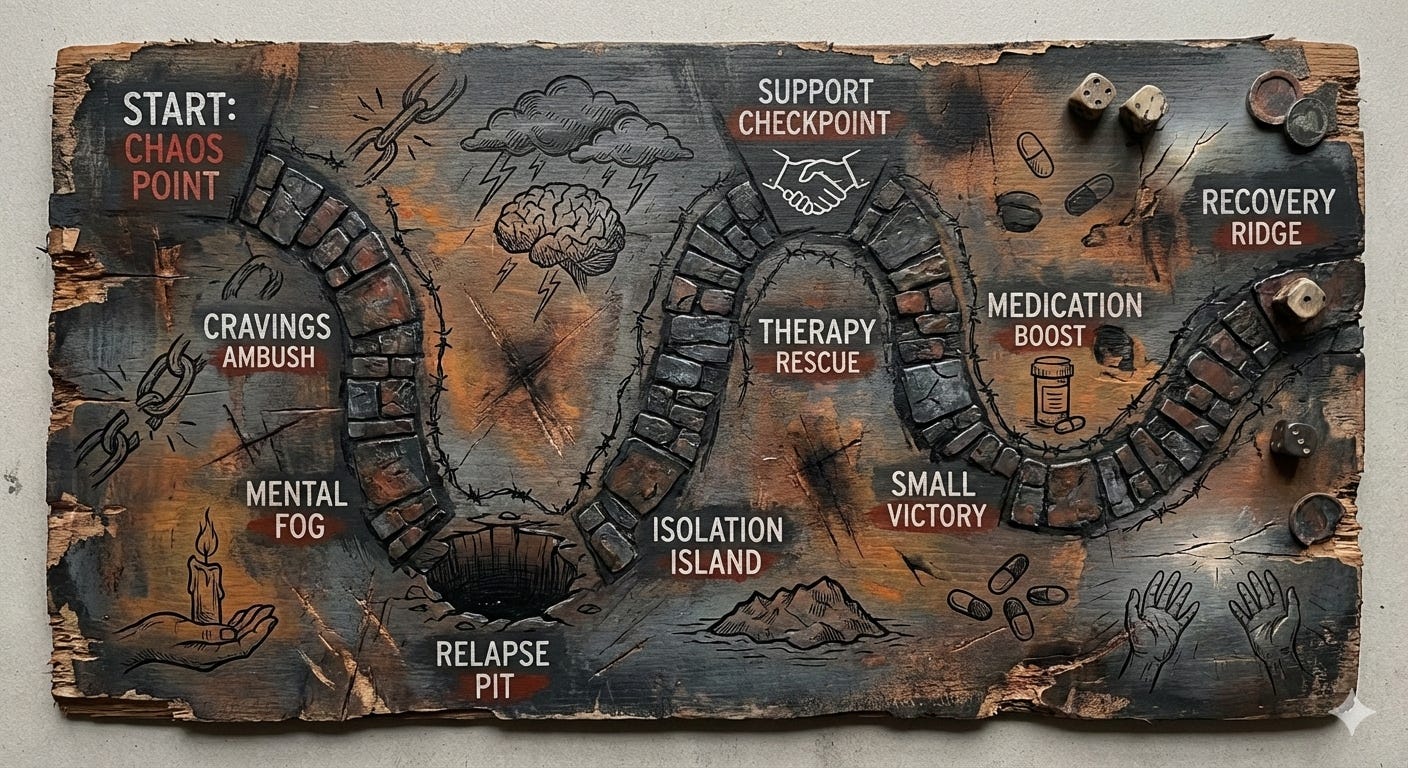
Addiction isn’t some moral failing or a bad habit. It’s a cruel rewiring of your brain that traps you in cycles of craving and relapse—sometimes so loud it feels like your own worst enemy.
Recovery? It’s not about fitting into some cookie-cutter program. It’s about crafting a plan that fits your brain, your life, your mess, and your strengths.
If you’re sick of generic advice that doesn’t get you, this is your wake-up call.
Step 1: Get Real. No Excuses.
Where are you now? Not where you want to be—right now.
What’s your story? The good, the bad, the ugly.
How does addiction slam you—body, mind, emotions? Do anxiety, depression, PTSD, ADHD, or other demons tag along?
When feelings hit, do you overthink, disconnect, or get flooded?
Who’s really in your corner? Who’s just noise?
What scares you about recovery? What would winning actually look like beyond just not using?
What’s blocking your way—money, stigma, trauma, habits? Stop hiding from it.
Why This Matters:
The clearer you get on the real picture, the sharper your map will be. Addiction looks different for everyone; your brain chemistry, your mental health, your environment—all of it shapes your journey. Own your truth now so you can build a plan that fits.
Step 2: Arm Yourself Like a Fighter
This is war, and every soldier needs weapons.
What meds have you tried? What worked? What made things worse? GLP-1 meds are new players dialing down cravings in ways old meds don’t. Have you asked your doc about them yet?
Therapy and support aren’t one-size-fits-all. Talk therapy, trauma care, CBT, DBT, EMDR, groups—what fits your weird brain and your story?
Tech isn’t sci-fi anymore. VR therapy, AI craving trackers, telehealth—what’s doable without drowning?
What habits keep you human? Mindfulness, exercise, sleep, food, creativity? Own them.
Clinical Edge:
GLP-1 medications influence the brain’s reward circuitry differently than traditional MAT meds. They modulate neural pathways linked to craving intensity and impulse control, offering hope especially for those who haven’t found success with older treatments. Meanwhile, therapies like EMDR target trauma’s root, breaking cycles that fuel relapse. Matching treatment to your brain and history isn’t optional; it’s essential.
Step 3: Build Your Tribe
Recovery is a team sport. Who’s on yours?
List your real supporters—friends, family, groups, pros.
Who’s missing? What support do you crave?
What toxic nonsense do you cut loose?
Commit to one new connection this week. No excuses.
Real Talk:
Not all “support” supports you. Some people enable old habits or drain your energy. Your tribe should be your lift, not your drag. And if your crew doesn’t get neurodivergence or mental health struggles, it’s okay to seek different spaces that do.
Step 4: Daily Battles & Crisis Armor
Recovery isn’t just big wins—it’s every damn day.
Build a daily routine that works for you.
Know your craving triggers and have your go-to weapons ready: breathing, movement, distraction, calls.
Get real about your emotional storms—how will you ride them out?
Have a crystal-clear crisis plan. Know who to call, where to go, what to do when the shit hits the fan.
Prepare your relapse comeback plan—no shame, just strategy.
Depth Check:
Routine anchors neurodivergent brains and those with co-occurring disorders—helping regulate dopamine and cortisol cycles. Crisis plans aren’t just lists; they’re lifelines that should be rehearsed, updated, and shared with allies. And relapse isn’t failure—it’s a signal to adapt your plan.
Step 5: Watch Your Back & Celebrate Every Inch
Recovery is messy and unpredictable.
Journal your wins, losses, surprises weekly.
Track mood and cravings—see the patterns no one talks about.
Celebrate small victories. Every damn step counts.
Adjust your plan like a pro, based on what’s working and what’s not.
Why This Works:
Self-monitoring builds self-awareness—the cornerstone of lasting change. Mood and craving logs reveal hidden triggers or progress that might otherwise get lost in the fog. Celebrating wins rewires your brain’s reward system to reinforce healthy behavior.
Step 6: Own Your Weirdness & Strength
You’re not a stereotype. Your brain and life are unique.
If you’re neurodivergent, honor your quirks—executive dysfunction, sensory overload, social stuff.
If mental health shadows your addiction, manage both fiercely without burning out.
If you intellectualize or disconnect from feelings, bridge that gap with tools that work for you.
Own your identity and seek communities that see you.
Clinical & Lived Insight:
Neurodivergence affects impulse control, emotional regulation, and social navigation—core pieces of recovery. Co-occurring disorders require integrated care to avoid burnout and improve outcomes. Intellectualizing can be a defense but also a barrier to emotional healing. Your identity shapes stigma and access—finding affirming spaces is survival.
How to Build and Use Your Personalized Recovery Roadmap
Alright, you’ve got the framework. Now let’s get practical. Here’s how to build your roadmap and actually make it work for you. Also her is our FREE Recovery roadmap Appplication: https://progressisprogress.my.canva.site/recovery-roadmap
Step 1: Carve Out Time and Space
Recovery planning isn’t something you squeeze in between texts and Netflix binges. Find a quiet moment—maybe with a notebook, your phone, or a doc on your computer. This is your sacred time to get honest and raw. No distractions, no excuses.
Step 2: Work Through the Sections One at a Time
Don’t try to solve everything in one sitting. Pick a section—start with the Self-Discovery Inventory if you’re not sure—and work through the prompts. Write or type your answers like you’re talking to your closest, no-BS friend.
Step 3: Be Brutally Honest
This isn’t the place for “nice” answers. The more honest you are about your triggers, challenges, and supports, the more useful your roadmap will be. If something feels uncomfortable or scary to admit, lean into that—it’s where your growth lives.
Step 4: Use Your Answers to Build Your Plan
After each section, highlight or summarize what you’ve learned. For example, if your craving triggers are stress and isolation, your plan might include specific daily mindfulness practices and weekly support group meetings.
Step 5: Set Small, Concrete Goals
Your roadmap isn’t a vague wish list. Break it down into bite-size, doable steps. “Call one support person today,” or “Try a breathing exercise when cravings hit.” Small wins build momentum.
Step 6: Keep It Visible and Alive
Print it out, save it on your phone, or keep it in your journal. Review and update your roadmap regularly—weekly or monthly. Recovery isn’t static, and your plan shouldn’t be either.
Step 7: Use It When You Need It Most
When cravings spike or life throws curveballs, pull out your roadmap. Use your crisis plan. Remember your tools. Reach out to your supports. This is your lifeline—use it like one.
This Is Your Map, Not a Prison
No one else’s rules. No cookie-cutter crap. Just a brutal, honest, living roadmap for your recovery journey.
Be flexible. Be fierce. Be kind to yourself. Every step forward is progress.
Want a step-by-step workbook to build this plan with raw honesty and clinical smarts? It’s coming soon. For real, no-BS guidance on owning your recovery, subscribe at progressisprogress.substack.com.
So what’s stopping you from starting your roadmap right now?
Write your story. List your triggers. Call one person. Take one step. Recovery is waiting.